Liliopsida
Liliopsida Batsch is a botanical name for the class containing the family Liliaceae. It is considered synonymous with the name monocotyledon. Publication of the name is credited to Scopoli : see author citation (botany). This name is formed by replacing the termination -aceae in the name Liliaceae by the termination -opsida.

Neva Micheva · CC BY 2.5 · via Wikipedia/Commons. May be a photograph of a specimen, or an artist’s reconstruction — an interpretation of a skeleton, since colour and soft tissue are almost never preserved.
On record
Recorded, not inferred- Sits inside
- AnthophytaPBDB
- Diet
- "photoautotroph"PBDB, for Streptophyta
Time the record covers
At least 32 million years on record.
The record covers at least 48.07 Mya to 15.98 Mya. No occurrence read is dated outside 66 Mya to 11.63 Mya.
33 occurrences of Liliopsida on record, most of them in the Eocene. The Paleobiology Database records this as a living group, and the chart stops with its fossils rather than at the present. Bar height is expected occurrences, not a count: each fossil is spread across the span it is dated to, so a tall narrow bar means tight dating and a low wide one means loose.
When
33 occurrencesThese are dates about fossils, not the animal: the record can only begin after it arose and end before it died out, so either end may reach further. Shares are expected occurrences: a fossil dated to a span is counted partly in each period it straddles. More on what this infers.
Found in
8 formations
- Iguincha Formation · Nabon Group11
- Huitrera Formation7
- Oldhaven Formation3
- Headon Beds Formation1
- Lower Headon Formation1
- Latrero Formation · Nabon Group1
Loading coastlines…
The named rock units Liliopsida has been recovered from, largest first. Drawn where the rock is now, not where it formed. 7 occurrences have no formation on record, which is common for older literature.
Liliopsida and its relatives
EoceneWhere Liliopsida and its relatives were recorded in the Eocene.
Found in the same rock
459 taxa- Brasenia ovula6 sites
- Caricoidea obscura6 sites
- Limnocarpus forbesi6 sites
- Castaneophyllum patagonicum5 sites
- Hantsia pulchra5 sites
- Lauraceae5 sites
- Magnoliopsida5 sites
- Mastixicarpum crassum5 sites
- Potamogeton pygmaeus5 sites
- Rhamnospermum bilobatum5 sites
- Sequoia couttsiae5 sites
- Stratiotes hantonensis5 sites
- Actinidia crassisperma4 sites
- Agathis zamunerae4 sites
- Carpolithus4 sites
- Eomastixia rugosa4 sites
- Eucalyptus4 sites
- Eurya (Cleyera) stigmosa4 sites
- Ginkgoites patagonicus4 sites
- Malvales4 sites
- Mastixia glandulosa4 sites
- Myrtaceae4 sites
- Retrophyllum spiralifolium4 sites
- Todea amissa4 sites
The Paleobiology Database records 14 sites for Liliopsida, and this reads all of them. The number is how many of those sites it was catalogued from too. The 24 sharing the most are listed.
This is not a list of everything alive at the time. It is only what has come out of the same ground as this animal and been written down.
Entered from
9 references- Middle to late Miocene environments of southern Ecuador: temperature, elevation and fossil plants of the Nabon Basin.12
- Eocene Plant Diversity at Laguna del Hunco and Río Pichileufú, Patagonia, Argentina7
- The Lower Tertiary Floras of Southern England. IV. A summary and survey of findings in the light of recent botanical observations3
- Chandler, 19633
- Flora of the Lower Headon Beds of Hampshire and the Isle of Wight2
- Post-Ypresian plant remains from the Isle of Wight and the Selsey Peninsula, Sussex2
- Plant Remains of the Hengistbury and Barton Beds2
- An interesting new fossil dragonfly (Anisoptera: Libellulidae: “Brachydiplacini”) from the Miocene of Germany, with a discussion on the phylogeny of Tetrathemistinae and a fossil list for the locality Heggbach1
- A Catalogue of Fossil Plants from India Part 4: Cenozoic (Tertiary) Megafossils1
Each of the 33 occurrences read was entered from one of these publications, ordered by how many each accounts for. This is not a search for papers mentioning the name. Entries link to doi.org where the Paleobiology Database holds an identifier, and to its own record where it does not. Relayed as the Paleobiology Database holds them, not checked against what they resolve to.
Media and terms
Media content2
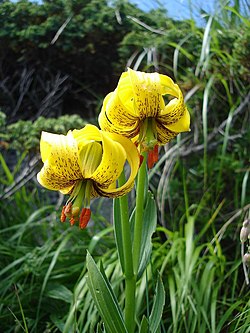
Picture of Liliopsida
- Source
- Wikipedia/Commons
- Credit
- Neva Micheva
- Licence
- CC BY 2.5
- Commercial use
- the licence allows it
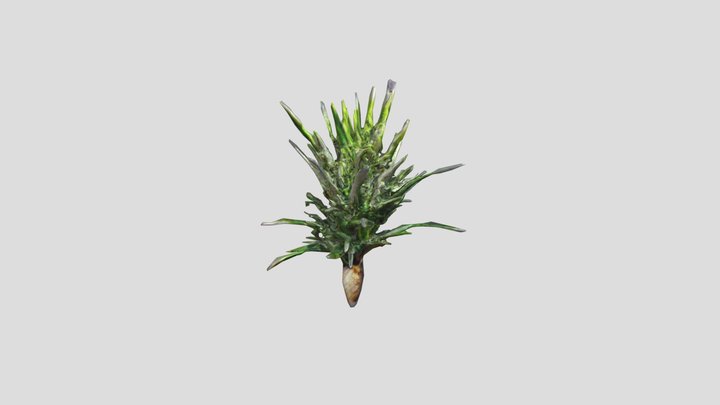
3D model
- Source
- Sketchfab
- Credit
- aaronamoncul212
- Licence
- CC Attribution
- Commercial use
- cannot be read from the licence given — check the record
Smithsonian Open Access was not reached for this taxon, so this list is what the others held rather than everything there is.
The description on this site
- Source
- Wikipedia, “Liliopsida”
- Licence
- CC BY-SA 4.0
This is what the site found, which is not the same as what exists.
Keep going
What may have been alongside itAnthophyta through timeFormations of the EoceneThe world it lived on
Occurrence data from the Paleobiology Database, CC BY 4.0. (Kenrick and Crane 1997)