Lagomorpha
Searched as Lagomorpha indet.. The Paleobiology Database treats Lagomorpha as the accepted name.
The lagomorphs are the members of the taxonomic order Lagomorpha, of which there are two living families: the Leporidae and the Ochotonidae (pikas). There are 110 recent species of lagomorph, of which 109 species in twelve genera are extant, including ten genera of rabbits, one genus of hare, and one genus of pika ; and in which one monospecific genus is recently extinct, that of the Sardinian pika. Lagomorphs are found on every continent in the world except Antarctica, with several regions being host to introduced populations of European rabbits and European hares.

Gareth Rasberry · CC BY-SA 3.0 · via Wikipedia/Commons. May be a photograph of a specimen, or an artist’s reconstruction — an interpretation of a skeleton, since colour and soft tissue are almost never preserved.
On record
Recorded, not inferred- Sits inside
- DuplicidentataPBDB
- Diet
- herbivorePBDB
- Life habit
- ground dwellingPBDB
- Motility
- actively mobilePBDB, for Osteichthyes
- Environment
- terrestrialPBDB, for Eutheria
Time the record covers
At least 55 million years on record.
The record covers at least 56 Mya to 129 ka. No occurrence read is dated outside 59.24 Mya to 11.7 ka.
78 occurrences of Lagomorpha on record, most of them in the Miocene. The Paleobiology Database records this as a living group. Bar height is expected occurrences, not a count: each fossil is spread across the span it is dated to, so a tall narrow bar means tight dating and a low wide one means loose.
When
78 occurrencesThese are dates about fossils, not the animal: the record can only begin after it arose and end before it died out, so either end may reach further. Shares are expected occurrences: a fossil dated to a span is counted partly in each period it straddles. More on what this infers.
Found in
26 formations
- Lower Freshwater Molasse Formation6
- Varswater Formation3
- Valentine Formation2
- Fleming Formation2
- Kizilirmak Formation2
- Brule Formation1
Loading coastlines…
The named rock units Lagomorpha has been recovered from, largest first. Drawn where the rock is now, not where it formed. 2 further formations hold fewer occurrences each and are not listed. 42 occurrences have no formation on record, which is common for older literature.
Lagomorpha and its relatives
MioceneWhere Lagomorpha and its relatives were recorded in the Miocene.
Found in the same rock
1,197 taxa- Palaeolagus haydeni56 sites
- Hesperocyon gregarius46 sites
- Megalagus turgidus39 sites
- Brontotheriidae37 sites
- Leptomeryx evansi34 sites
- Ischyromys32 sites
- Ischyromys typus32 sites
- Palaeolagus temnodon32 sites
- Hesperocyon30 sites
- Paradjidaumo trilophus29 sites
- Herpetotherium fugax28 sites
- Merycoidodontidae27 sites
- Palaeolagus burkei27 sites
- Palaeolagus philoi26 sites
- Hyracodon25 sites
- Ischyromys veterior25 sites
- Palaeolagus hypsodus25 sites
- Altasciurus relictus24 sites
- Eumys elegans24 sites
- Leptomeryx24 sites
- Daphoenus23 sites
- Leptictidae23 sites
- Mesohippus bairdi23 sites
- Palaeolagus23 sites
The Paleobiology Database records at least 1,392 sites for Lagomorpha, and this reads 240 of them. The number is how many of those sites it was catalogued from too. The 24 sharing the most are listed.
This is not a list of everything alive at the time. It is only what has come out of the same ground as this animal and been written down.
Entered from
46 references- Rodent stratigraphy of some Miocene fissure fillings in Gargano (prov. Foggia, Italy)26
- A new Late Agenian (MN2a, Early Miocene) fossil assemblage from Wallenried (Molasse Basin, Canton Fribourg, Switzerland)5
- New late Oligocene rodent faunas from the Pannonian basin2
- A giant rhinocerotoid (Mammalia, Perissodactyla) from the Late Oligocene of north-central Anatolia (Turkey)2
- A Preliminary Notice on the Miocene and Pliocene Mammalian Faunas Near Valentine, Nebraska2
- South Turkwel: a new Pliocene hominid site in Kenya1
- Paleofaunal survey, collecting, processing, and documentation at two locations on Fort Polk, Louisiana1
- Late Pleistocene hunter-gatherers at Ishango (eastern Zaire): the faunal evidence1
- Miocene mammals of the Split Rock area, Granite Mountains basin, central Wyoming1
- Moles of the Scapanus latimanus group (Talpidae, Insectivora) from the Pliocene and Pleistocene of California1
- Laetoli: a Pliocene Site in Northern Tanzania1
- Palaeoecology of the Pliocene and lower Pleistocene hominids of southern Africa: how good is the chronological and paleoenvironmental evidence?1
Each of the 78 occurrences read was entered from one of these publications, ordered by how many each accounts for. This is not a search for papers mentioning the name. 34 further references are not listed. Entries link to doi.org where the Paleobiology Database holds an identifier, and to its own record where it does not. Relayed as the Paleobiology Database holds them, not checked against what they resolve to.
Media and terms
Media content2

Picture of Lagomorpha
- Source
- Wikipedia/Commons
- Credit
- Gareth Rasberry
- Licence
- CC BY-SA 3.0
- Commercial use
- the licence allows it
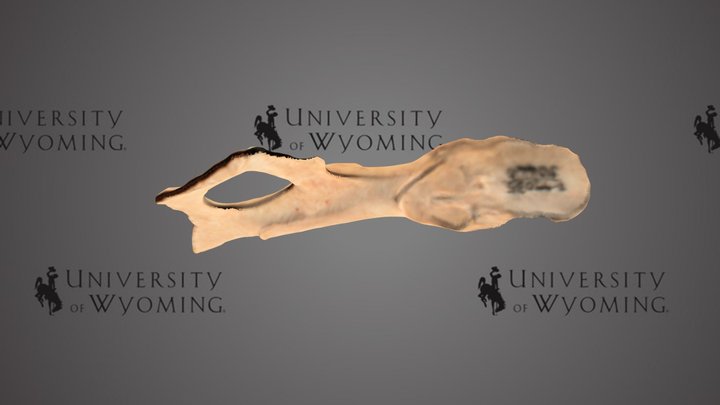
3D model
- Source
- Sketchfab
- Licence
- CC Attribution-NonCommercial
- Commercial use
- the licence does not allow it
Smithsonian Open Access and MorphoSource were not reached for this taxon, so this list is what the others held rather than everything there is.
The description on this site
- Source
- Wikipedia, “Lagomorpha”
- Licence
- CC BY-SA 4.0
This is what the site found, which is not the same as what exists.
Keep going
What may have been alongside itDuplicidentata through timeFormations of the MioceneThe world it lived on
Occurrence data from the Paleobiology Database, CC BY 4.0. (Brandt 1885)