Lachnostoma latucelsum
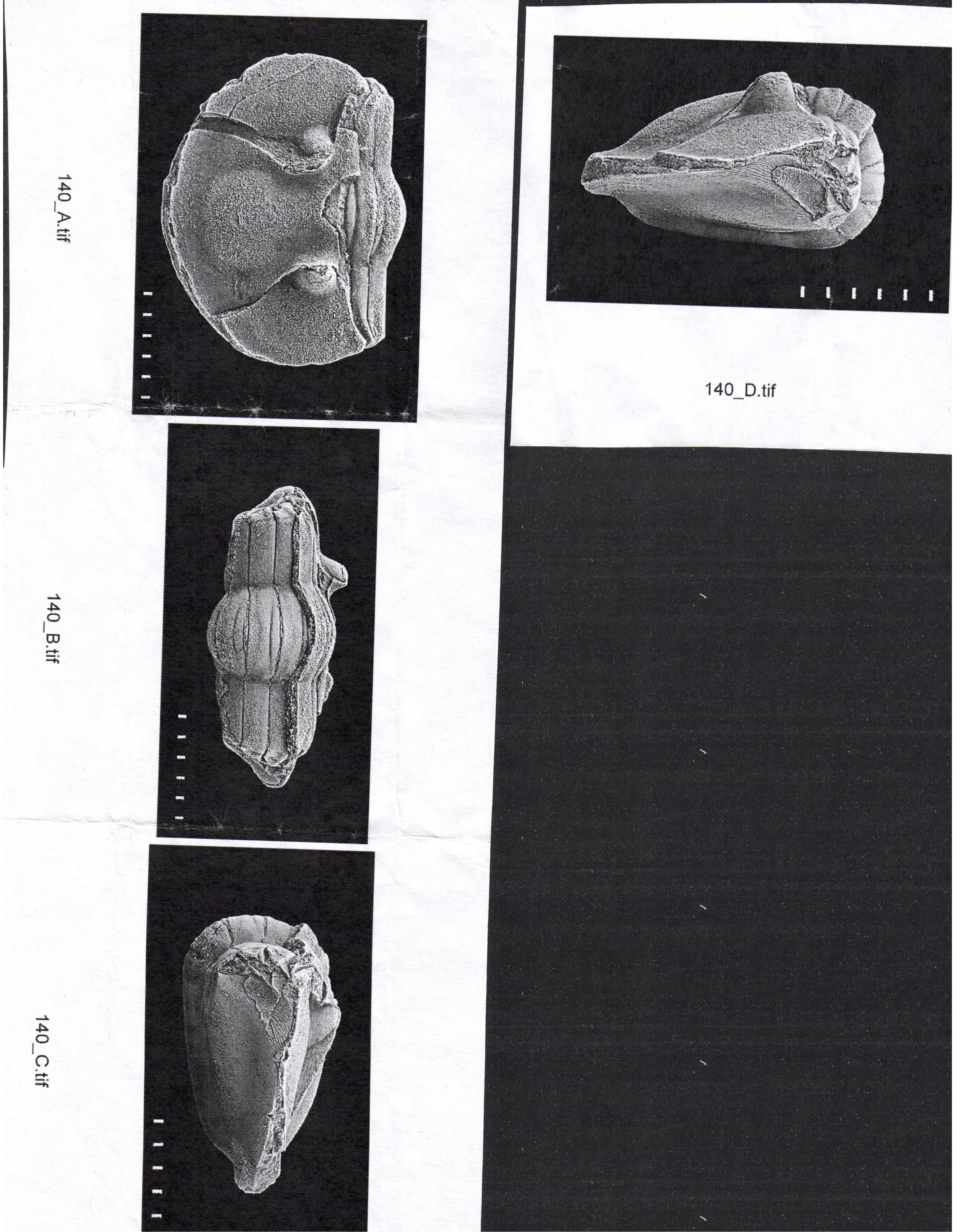
Sprinkle, James · CC0 · via GBIF. May be a photograph of a specimen, or an artist’s reconstruction — an interpretation of a skeleton, since colour and soft tissue are almost never preserved.
On record
Recorded, not inferred- Sits inside
- LachnostomaPBDB
- Diet
- carnivorePBDB, for Trilobita
- Life habit
- low-level epifaunalPBDB, for Asaphida
- Motility
- fast-movingPBDB, for Asaphida
- Vision
- well-developedPBDB, for Asaphidae
- Environment
- marinePBDB, for Trilobita
Time the record covers
At least 5.8 million years on record.
The record covers at least 477.1 Mya to 471.3 Mya. No occurrence read is dated outside 486.85 Mya to 469.4 Mya.
46 occurrences of Lachnostoma latucelsum on record, most of them in the Ordovician. Bar height is expected occurrences, not a count: each fossil is spread across the span it is dated to, so a tall narrow bar means tight dating and a low wide one means loose.
When
46 occurrences- Ordovician100%
These are dates about fossils, not the animal: the record can only begin after it arose and end before it died out, so either end may reach further. Shares are expected occurrences: a fossil dated to a span is counted partly in each period it straddles. More on what this infers.
Found in
8 formations
- Outram Formation23
- Wah Wah Formation · Pogonip Group12
- Wahwah Limestone Formation4
- Garden City Formation2
- Ninemile Formation2
- Antelope Valley Formation · Pogonip Group1
Loading coastlines…
The named rock units Lachnostoma latucelsum has been recovered from, largest first. Drawn where the rock is now, not where it formed.
Lachnostoma latucelsum and its relatives
OrdovicianWhere Lachnostoma latucelsum and its relatives were recorded in the Ordovician.
Found in the same rock
57 taxa- Kirkella declevita17 sites
- Pseudocybele nasuta17 sites
- Presbynileus (Presbynileus) latifrons11 sites
- Hesperonomia10 sites
- Carolinites genacinaca9 sites
- Goniotelina brevis8 sites
- Isoteloides saxosimontis8 sites
- Cybelopsis7 sites
- Dimeropygiella caudanodosa7 sites
- Pseudomera insolita7 sites
- Acidiphorus6 sites
- Pliomeridius6 sites
- Diparelasma5 sites
- Acidiphorus brighti4 sites
- Asaphidae4 sites
- Forteyops sexapugia3 sites
- Ptyocephalus3 sites
- Zittelloceras3 sites
- Acidiphorus williamsi2 sites
- Benthamaspis diminutiva2 sites
- Hesperonomia antelopensis2 sites
- Isoteloides2 sites
- Isoteloides polaris2 sites
- Raphistomina2 sites
The Paleobiology Database records 46 sites for Lachnostoma latucelsum, and this reads all of them. The number is how many of those sites it was catalogued from too. The 24 sharing the most are listed.
This is not a list of everything alive at the time. It is only what has come out of the same ground as this animal and been written down.
Entered from
6 references- Trilobites from the Survey Peak, Outram and Skoki Formations (Upper Cambrian-Lower Ordovician) at Wilcox Pass, Jasper National Park, Alberta)23
- Lower Ordovician trilobites from western Utah and eastern Nevadea9
- Lower Ordovician detailed stratigraphic sections for western Utah6
- Middle and Lower Ordovician Formations in Southernmost Nevada and Adjacent California4
- Reworking diversity: effects of storm deposition on evenness and sampled richness, Ordovician of the Basin and Range, Utah and Nevada2
- Stratigraphy of the Garden City Formation in northeastern Utah, and its trilobite faunas2
Each of the 46 occurrences read was entered from one of these publications, ordered by how many each accounts for. This is not a search for papers mentioning the name. Entries link to doi.org where the Paleobiology Database holds an identifier, and to its own record where it does not. Relayed as the Paleobiology Database holds them, not checked against what they resolve to.
Media and terms
Media content1
Picture of Lachnostoma latucelsum
- Source
- GBIF
- Credit
- Sprinkle, James
- Licence
- CC0
- Commercial use
- the licence allows it
No 3D scan of Lachnostoma latucelsum was found in MorphoSource and Sketchfab.
Smithsonian Open Access was not reached for this taxon, so this list is what the others held rather than everything there is.
This is what the site found, which is not the same as what exists.
Keep going
What may have been alongside itLachnostoma through timeFormations of the OrdovicianThe world it lived on
Occurrence data from the Paleobiology Database, CC BY 4.0. Ross 1951