Haploceras elimatum
No picture of Haploceras elimatum was found. Wikipedia, Wikidata and iDigBio were searched and had none. Smithsonian Open Access did not answer, so this is what the others held rather than everything there is. GBIF was asked, and what came back is not recorded: nothing, or a picture this site could not tie to Haploceras elimatum, or no answer at all. This entry cannot say which.
On record
Recorded, not inferred- Sits inside
- HaplocerasPBDB
- Diet
- carnivorePBDB, for Ammonoidea
- Life habit
- nektonicPBDB, for Ammonoidea
- Motility
- fast-movingPBDB, for Ammonoidea
- Vision
- well-developedPBDB, for Cephalopoda
- Environment
- marinePBDB, for Cephalopoda
Time the record covers
At least 1.9 million years on record.
The record covers at least 145.06 Mya to 143.1 Mya. No occurrence read is dated outside 161.5 Mya to 137.05 Mya.
22 occurrences of Haploceras elimatum on record. Bar height is expected occurrences, not a count: each fossil is spread across the span it is dated to, so a tall narrow bar means tight dating and a low wide one means loose.
When
22 occurrencesThese are dates about fossils, not the animal: the record can only begin after it arose and end before it died out, so either end may reach further. Shares are expected occurrences: a fossil dated to a span is counted partly in each period it straddles. More on what this infers.
Found in
3 formations
Loading coastlines…
The named rock units Haploceras elimatum has been recovered from, largest first. Drawn where the rock is now, not where it formed. 18 occurrences have no formation on record, which is common for older literature.
Found in the same rock
119 taxa- Hypolissoceras carachtheis6 sites
- Haploceras (Volanites) verruciferum4 sites
- Neochetoceras4 sites
- Ptychophylloceras ptychoicum4 sites
- Semiformiceras semiforme4 sites
- Danubisphinctes3 sites
- Phylloceras serum3 sites
- Pseudodiscosphinctes3 sites
- Pseudolissoceras3 sites
- Aspidoceras2 sites
- Bochianites2 sites
- Haploceras staszycii2 sites
- Holcostephanus (Spiticeras) obliquelobatus2 sites
- Lytoceras liebigi2 sites
- Lytoceras municipale2 sites
- Neochetoceras steraspis2 sites
- Parapallasiceras2 sites
- Phylloceras semisulcatum2 sites
- Protetragonites tauricus2 sites
- Pseudodiscosphinctes geron2 sites
- Pseudohimalayites steinmanni2 sites
- Pseudosubplanites ponticus2 sites
- Simoceras2 sites
- Spiticeras2 sites
The Paleobiology Database records 19 sites for Haploceras elimatum, and this reads all of them. The number is how many of those sites it was catalogued from too. The 24 sharing the most are listed.
This is not a list of everything alive at the time. It is only what has come out of the same ground as this animal and been written down.
Entered from
11 references- Lower Berriasian ammonites from Dedina (Golubac Mountains, eastern Serbia) and their biostratigraphic implication5
- Genus Delphinella (Ammonoidea) from the Berriasian of the Crimean Mountains4
- Hermatypic corals in the Tithonian pelagic facies of Central Apennines. Evidence of Upper Jurassic sea-level changes3
- Upper Jurassic-lowermost Cretaceous fossil localities of the Gerecse and Pilis Mountains (rocks, fossils and stratigraphy)2
- A new ammonite fauna from the Tithonian (Semiformiceras/Verruciferum Zone) of the Lessinian Alps, Verona Province, Northern Italy2
- Early Berriasian ammonites from the Štramberk Limestone in the Kotouč Quarry (Outer Western Carpathians, Czech Republic)1
- Stratigraphy and ammonites of Cretaceous deposits of south-west Crimea1
- A unique Lower Tithonian fauna in the Gerecse Mts, Hungary1
- Upper Jurassic and Lower Cretaceous Buchia (Bivalvia) from southern Tibet, and some wider considerations1
- La serie Jurasica de la unidad Casa Blanca-Puerto de las Palomas (Zona Subbetica) [The Jurassic series of the Casa Blanca-Puerto de las Palomas Unit (Subbetic Zone)]1
- Faunes tithoniques des chaînes bétiques (Espagne méridionale)1
Each of the 22 occurrences read was entered from one of these publications, ordered by how many each accounts for. This is not a search for papers mentioning the name. Entries link to doi.org where the Paleobiology Database holds an identifier, and to its own record where it does not. Relayed as the Paleobiology Database holds them, not checked against what they resolve to.
Media and terms
Media content1
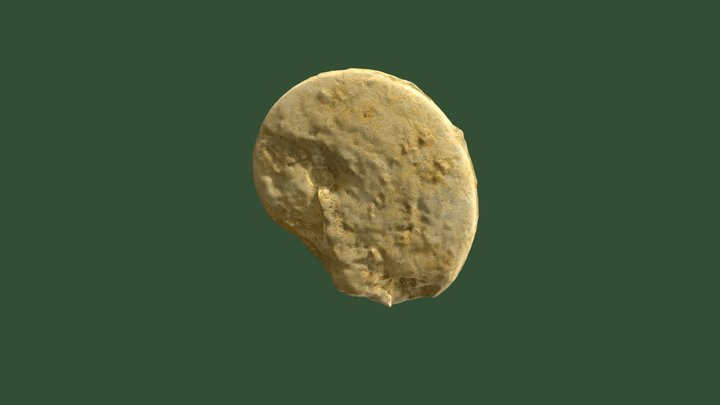
3D model
- Source
- Sketchfab
- Credit
- Shellie Luallin
- Licence
- CC Attribution
- Commercial use
- cannot be read from the licence given — check the record
No picture of Haploceras elimatum was found. Wikipedia, Wikidata and iDigBio were searched and had none.
Smithsonian Open Access did not answer, so this is what the others held rather than everything there is.
GBIF was asked, and what came back is not recorded: nothing, or a picture this site could not tie to Haploceras elimatum, or no answer at all. This entry cannot say which.
Smithsonian Open Access and MorphoSource were not reached for this taxon, so this list is what the others held rather than everything there is.
This is what the site found, which is not the same as what exists.
Keep going
What may have been alongside itHaploceras through timeThe world it lived on
Occurrence data from the Paleobiology Database, CC BY 4.0. (Oppel 1870)