Globigerinoides elongatus

via iDigBio · CC0 · via iDigBio. May be a photograph of a specimen, or an artist’s reconstruction — an interpretation of a skeleton, since colour and soft tissue are almost never preserved.
On record
Recorded, not inferred- Sits inside
- GlobigerinoidesPBDB
- Diet
- omnivorePBDB, for Foraminifera
- Life habit
- semi-infaunalPBDB, for Foraminifera
- Motility
- stationaryPBDB, for Foraminifera
Time the record covers
At least 5.2 million years on record.
The record covers at least 5.333 Mya to 129 ka. No occurrence read is dated outside 11.63 Mya to 0 Mya.
108 occurrences of Globigerinoides elongatus on record, most of them in the Pleistocene. Bar height is expected occurrences, not a count: each fossil is spread across the span it is dated to, so a tall narrow bar means tight dating and a low wide one means loose.
When
108 occurrences- Miocene32%
- Pliocene24%
- Pleistocene44%
- Holoceneunder 1%
These are dates about fossils, not the animal: the record can only begin after it arose and end before it died out, so either end may reach further. Shares are expected occurrences: a fossil dated to a span is counted partly in each period it straddles. More on what this infers.
Found in
2 formations
Loading coastlines…
The named rock units Globigerinoides elongatus has been recovered from, largest first. Drawn where the rock is now, not where it formed. 106 occurrences have no formation on record, which is common for older literature.
Globigerinoides elongatus and its relatives
PleistoceneWhere Globigerinoides elongatus and its relatives were recorded in the Pleistocene.
Found in the same rock
187 taxa- Trilobatus sacculifer105 sites
- Globigerinoides ruber104 sites
- Globigerinoides conglobatus100 sites
- Neogloboquadrina dutertrei100 sites
- Pulleniatina obliquiloculata93 sites
- Globigerinella siphonifera82 sites
- Globorotalia (Globorotalia) tumida80 sites
- Orbulina universa80 sites
- Globorotalia (Hirsutella) scitula78 sites
- Globorotalia (Menardella) menardii78 sites
- Globorotalia crassaformis64 sites
- Globigerinoides extremus59 sites
- Neogloboquadrina humerosa59 sites
- Trilobatus immaturus59 sites
- Globorotalia (Hirsutella) margaritae58 sites
- Globorotalia (Menardella) limbata58 sites
- Globorotalia multicamerata58 sites
- Neogloboquadrina acostaensis58 sites
- Dentoglobigerina venezuelana57 sites
- Globigerinoides obliquus57 sites
- Globigerinoides triloba57 sites
- Globorotalia plesiotumida57 sites
- Menardella57 sites
- Neogloboquadrina pseudopima57 sites
The Paleobiology Database records 107 sites for Globigerinoides elongatus, and this reads all of them. The number is how many of those sites it was catalogued from too. The 24 sharing the most are listed.
This is not a list of everything alive at the time. It is only what has come out of the same ground as this animal and been written down.
Entered from
9 references- Palaeobathymetric gradients across Timor during 5.7–3.3 Ma and implications for collision uplift57
- Site U139428
- Site U139513
- Site U14004
- Site U14012
- High coral reef connectivity across the Indian Ocean is revealed 6–7 Ma ago by a turbid-water scleractinian assemblage from Tanzania (Eastern Africa)1
- The early Pliocene mammal assemblage of Val di Pugna (Tuscany, Italy) in the light of calcareous plankton biostratigraphical data and paleoecological observations1
- Biogeography and climatology of Pliocene and Messinian fossil fish of eastern-central Italy1
- Observations on the Neogene of Northwestern Ecuador1
Each of the 108 occurrences read was entered from one of these publications, ordered by how many each accounts for. This is not a search for papers mentioning the name. Entries link to doi.org where the Paleobiology Database holds an identifier, and to its own record where it does not. Relayed as the Paleobiology Database holds them, not checked against what they resolve to.
Media and terms
Media content2
Picture of Globigerinoides elongatus
- Source
- iDigBio
- Credit
- via iDigBio
- Licence
- CC0
- Commercial use
- the licence allows it
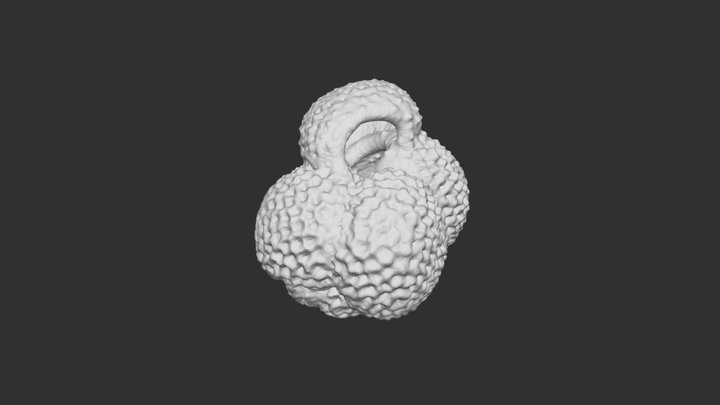
3D model
- Source
- Sketchfab
- Credit
- foraminarium
- Licence
- CC Attribution
- Commercial use
- cannot be read from the licence given — check the record
Smithsonian Open Access and MorphoSource were not reached for this taxon, so this list is what the others held rather than everything there is.
This is what the site found, which is not the same as what exists.
Keep going
What may have been alongside itGlobigerinoides through timeFormations of the PleistoceneThe world it lived on
Occurrence data from the Paleobiology Database, CC BY 4.0. (d'Orbigny 1826)