Glabella
Glabella is a genus of small tropical and warm-water sea snails, marine gastropod molluscs in the family Marginellidae, the margin snails.

Adzivo at English Wikipedia · Public Domain · via Wikipedia/Commons. May be a photograph of a specimen, or an artist’s reconstruction — an interpretation of a skeleton, since colour and soft tissue are almost never preserved.
On record
Recorded, not inferred- Sits inside
- MarginellidaePBDB
- Diet
- carnivorePBDB, for Marginellidae
- Life habit
- epifaunalPBDB, for Marginellidae
- Motility
- actively mobilePBDB, for Marginellidae
- Vision
- limitedPBDB, for Gastropoda
Time the record covers
At least 23 million years on record.
The record covers at least 27.3 Mya to 3.6 Mya. No occurrence read is dated outside 33.9 Mya to 2.58 Mya.
20 occurrences of Glabella on record, most of them in the Miocene. The Paleobiology Database records this as a living group, and the chart stops with its fossils rather than at the present. Bar height is expected occurrences, not a count: each fossil is spread across the span it is dated to, so a tall narrow bar means tight dating and a low wide one means loose.
When
20 occurrencesThese are dates about fossils, not the animal: the record can only begin after it arose and end before it died out, so either end may reach further. Shares are expected occurrences: a fossil dated to a span is counted partly in each period it straddles. More on what this infers.
Found in
5 formations
- Rifle Butts Formation · Kaierero Group8
- Termofourà Formation6
- Baldissero Formation4
- Nari Formation1
- Moin Formation · Limon Group1
Loading coastlines…
The named rock units Glabella has been recovered from, largest first. Drawn where the rock is now, not where it formed.
Glabella and its relatives
MioceneWhere Glabella and its relatives were recorded in the Miocene.
Found in the same rock
395 taxa- Amalda4 sites
- Antalis4 sites
- Aporrhais pespelecani4 sites
- Architectonica4 sites
- Aspa marginata4 sites
- Clavatula4 sites
- Conus4 sites
- Drillia4 sites
- Euspira catena4 sites
- Euspira submamillaris4 sites
- Ficus conditus4 sites
- Fissidentalium4 sites
- Gemmula4 sites
- Genota4 sites
- Haustator vermicularis4 sites
- Hexaplex4 sites
- Latirus4 sites
- Mitrella4 sites
- Nassarius4 sites
- Natica4 sites
- Nerita (Theliostyla) martiniana4 sites
- Neverita josephinia4 sites
- Oliva4 sites
- Olivella4 sites
The Paleobiology Database records 4 sites for Glabella, and this reads all of them. The number is how many of those sites it was catalogued from too. The 24 sharing the most are listed.
This is not a list of everything alive at the time. It is only what has come out of the same ground as this animal and been written down.
Entered from
4 references- Lower to Middle Miocene Mollusc assemblages from the Torino Hills (NW Italy): Synthesis of new data and chronostratigraphical arrangement10
- The Geology of the Waitaki Subdivision8
- A paleobiotic survey of Caribbean faunas from the Neogene of the Isthmus of Panama1
- Description of Mollusca from the post-Eocene Tertiary formation of north-western India: Cephalopoda, Opisthobranchiata, Siphonostomata1
Each of the 20 occurrences read was entered from one of these publications, ordered by how many each accounts for. This is not a search for papers mentioning the name. Each entry links to the Paleobiology Database's own record for the work.
Media and terms
Media content2

Picture of Glabella
- Source
- Wikipedia/Commons
- Credit
- Adzivo at English Wikipedia
- Licence
- Public Domain
- Commercial use
- the licence allows it
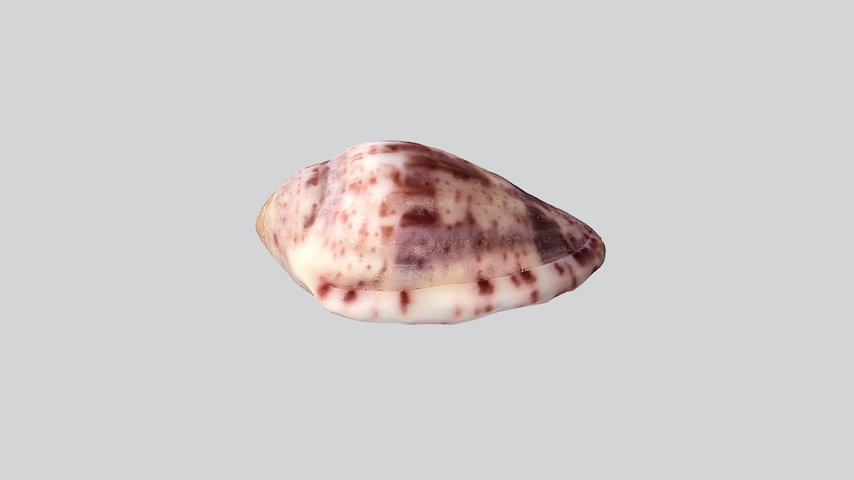
3D model
- Source
- Sketchfab
- Licence
- CC Attribution-NonCommercial-NoDerivs
- Commercial use
- the licence does not allow it
Smithsonian Open Access was not reached for this taxon, so this list is what the others held rather than everything there is.
The description on this site
- Licence
- CC BY-SA 4.0
This is what the site found, which is not the same as what exists.
Keep going
What may have been alongside itMarginellidae through timeFormations of the MioceneThe world it lived on
Occurrence data from the Paleobiology Database, CC BY 4.0. (Swainson 1840)