Elaeis guineensis
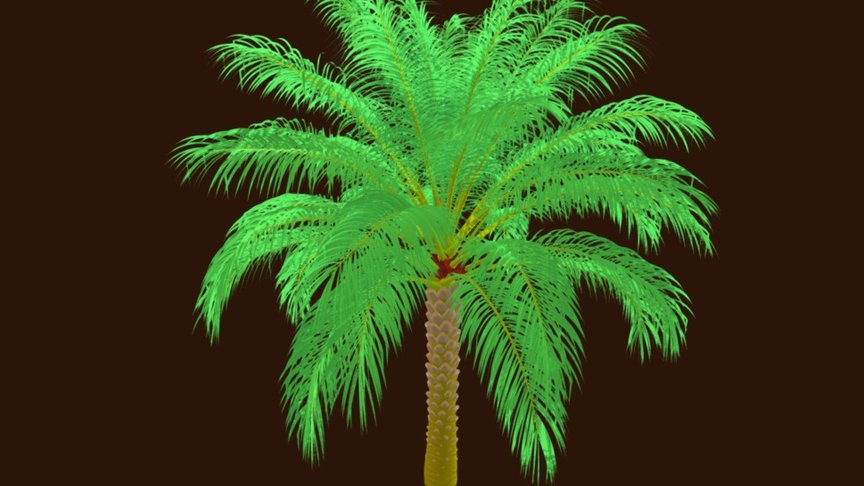
Elaeis guineensis is a species of palm commonly called oil palm but also sometimes African oil palm or macaw-fat. The first Western person to describe it and bring back seeds was the French naturalist Michel Adanson.

Franz Eugen Köhler, Köhler's Medizinal-Pflanzen · Public Domain · via Wikipedia/Commons. May be a photograph of a specimen, or an artist’s reconstruction — an interpretation of a skeleton, since colour and soft tissue are almost never preserved.
Time the record covers
At least 780 thousand years on record.
The record covers at least 2.58 Mya to 1.8 Mya. No occurrence read is dated outside 23.04 Mya to 0 Mya.
2 occurrences of Elaeis guineensis on record, most of them in the Pleistocene. Bar height is expected occurrences, not a count: each fossil is spread across the span it is dated to, so a tall narrow bar means tight dating and a low wide one means loose.
When
2 occurrences- Miocene44%
- Pliocene7%
- Pleistocene50%
- Holoceneunder 1%
These are dates about fossils, not the animal: the record can only begin after it arose and end before it died out, so either end may reach further. Shares are expected occurrences: a fossil dated to a span is counted partly in each period it straddles. More on what this infers.
Found in
1 formation
- Nkondo Formation · Albertine Group1
Loading coastlines…
The named rock units Elaeis guineensis has been recovered from, largest first. Drawn where the rock is now, not where it formed. 1 occurrence has no formation on record, which is common for older literature.
Elaeis guineensis and its relatives
PleistoceneWhere Elaeis guineensis and its relatives were recorded in the Pleistocene.
Found in the same rock
59 taxa- Indet. indet.2 sites
- Poaceae2 sites
- Acalypha1 site
- Acanthaceae1 site
- Afzelia1 site
- Aizoaceae1 site
- Alchornea1 site
- Antidesma1 site
- Antrocaryon micraster1 site
- Arecaceae1 site
- Bauhinia1 site
- Berlinia1 site
- Bombax1 site
- Cadaba1 site
- Caesalpiniaceae1 site
- Canarium1 site
- Celtis1 site
- Combretum1 site
- Cyperaceae1 site
- Diospyros1 site
- Dorstenia1 site
- Entandophragma utile1 site
- Equisetum1 site
- Ericaceae1 site
The Paleobiology Database records 2 sites for Elaeis guineensis, and this reads all of them. The number is how many of those sites it was catalogued from too. The 24 sharing the most are listed.
This is not a list of everything alive at the time. It is only what has come out of the same ground as this animal and been written down.
Entered from
2 references- Evolution of bovid diversity in the Plio-Pleistocene of Africa1
- Desert paleoenvironmental data from cave speleothems with examples from the Chihuahuan1
Each of the 2 occurrences read was entered from one of these publications, ordered by how many each accounts for. This is not a search for papers mentioning the name. Each entry links to doi.org. Relayed as the Paleobiology Database holds them, not checked against what they resolve to.
Media and terms
Media content2

Picture of Elaeis guineensis
- Source
- Wikipedia/Commons
- Credit
- Franz Eugen Köhler, Köhler's Medizinal-Pflanzen
- Licence
- Public Domain
- Commercial use
- the licence allows it
Smithsonian Open Access and MorphoSource were not reached for this taxon, so this list is what the others held rather than everything there is.
The description on this site
- Licence
- CC BY-SA 4.0
This is what the site found, which is not the same as what exists.
Keep going
What may have been alongside itFormations of the PleistoceneThe world it lived on
Occurrence data from the Paleobiology Database, CC BY 4.0.