Diaceratherium
Diaceratherium is an extinct genus of rhinocerotid from the Oligocene and Early Miocene of Eurasia.

Ghedoghedo · CC BY-SA 3.0 · via Wikipedia/Commons. May be a photograph of a specimen, or an artist’s reconstruction — an interpretation of a skeleton, since colour and soft tissue are almost never preserved.
On record
Recorded, not inferred- Sits inside
- TeleoceratinaPBDB
- Diet
- browserPBDB, for Rhinocerotidae
- Life habit
- ground dwellingPBDB, for Rhinocerotidae
- Motility
- actively mobilePBDB, for Osteichthyes
- Environment
- terrestrialPBDB, for Eutheria
Time the record covers
At least 11 million years on record.
The record covers at least 23.04 Mya to 11.63 Mya. No occurrence read is dated outside 27.3 Mya to 7.246 Mya.
16 occurrences of Diaceratherium on record, most of them in the Miocene. Bar height is expected occurrences, not a count: each fossil is spread across the span it is dated to, so a tall narrow bar means tight dating and a low wide one means loose.
When
16 occurrencesThese are dates about fossils, not the animal: the record can only begin after it arose and end before it died out, so either end may reach further. Shares are expected occurrences: a fossil dated to a span is counted partly in each period it straddles. More on what this infers.
Found in
5 formations
- Shanwang Formation2
- Brackwater Molasse Formation · Molasse Group2
- Xiacaowan Formation1
- Obere Bunte Mergel Formation1
- Sense Schichten Formation1
Loading coastlines…
The named rock units Diaceratherium has been recovered from, largest first. Drawn where the rock is now, not where it formed. 9 occurrences have no formation on record, which is common for older literature.
Diaceratherium and its relatives
MioceneWhere Diaceratherium and its relatives were recorded in the Miocene.
Found in the same rock
195 taxa- Ronzotherium4 sites
- Palaeochoerus3 sites
- Paratapirus intermedius3 sites
- Protaceratherium albigense3 sites
- Suidae3 sites
- Trionyx3 sites
- Adelomyarion vireti2 sites
- Amphicyon2 sites
- Amphitragulus quercyi2 sites
- Anthracotherium magnum2 sites
- Archaeomys2 sites
- Aureliachoerus aurelianensis2 sites
- Brachyodus2 sites
- Cepaea2 sites
- Chelydropsis decheni2 sites
- Cynelos helbingi2 sites
- Dremotherium guthi2 sites
- Elomeryx borbonicus2 sites
- Eomys2 sites
- Heterocemas2 sites
- Issiodoromys2 sites
- Ligeromeryx praestans2 sites
- Mauremys massiliensis2 sites
- Melissiodon quercyi2 sites
The Paleobiology Database records 16 sites for Diaceratherium, and this reads all of them. The number is how many of those sites it was catalogued from too. The 24 sharing the most are listed.
This is not a list of everything alive at the time. It is only what has come out of the same ground as this animal and been written down.
Entered from
9 references- Tapiridae (Perissodactyla, Mammalia) of the Swiss Molasse Basin during the Oligocene–Miocene transition3
- Diaceratherium massiliae nov. sp. des argiles oligocènes de Saint-André et Saint-Henri à Marseille et de Les Milles près d’Aix-en-Provence (SE de la France), premier grand Rhinocerotidae brachypode européen3
- Large mammals from Rickenbach (Switzerland, reference locality MP29, Late Oligocene): biostratigraphic and palaeoenvironmental implications2
- Stratigraphy and mammal faunas of the Brackwassermolasse in the surroundings of Ulm (Southwest Germany)2
- Miocene Stratigraphy and mammals of Shanwang, Shandong2
- The first Asian skeleton of Diaceratherium from the early Miocene Shanwang Basin (Shandong, China), and implications for its migration route1
- Le site paléontologique du Grand Morier (Pont-Boutard, Indre-et-Loire, France): contexte géologique et détail biostratigraphique des formations cénozoïques à partir des assemblages de vertébrés fossiles1
- Discovery of Fallomus ladakhensis Nanda & Sahni, 1998 (Mammalia, Rodentia, Diatomyidae) in the lignites of Nong Ya Plong (Phetchaburi Province, Thailand): systematic, biochronological and paleoenvironmental implications1
- The Aragonian vertebrate fauna of Xiacaowan, Jiangsu1
Each of the 16 occurrences read was entered from one of these publications, ordered by how many each accounts for. This is not a search for papers mentioning the name. Entries link to doi.org where the Paleobiology Database holds an identifier, and to its own record where it does not. Relayed as the Paleobiology Database holds them, not checked against what they resolve to.
Media and terms
Media content2

Picture of Diaceratherium
- Source
- Wikipedia/Commons
- Credit
- Ghedoghedo
- Licence
- CC BY-SA 3.0
- Commercial use
- the licence allows it
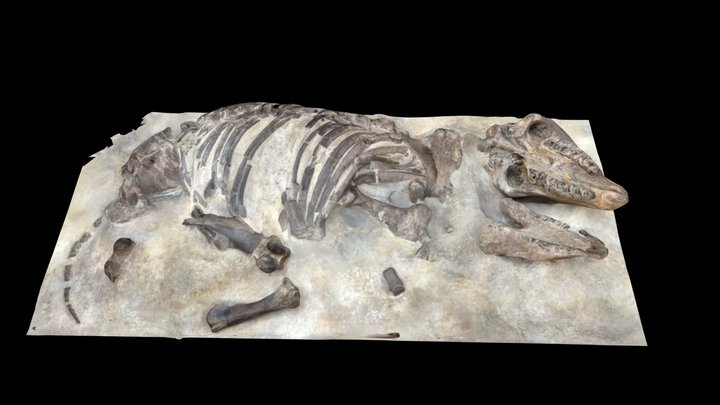
3D model
- Source
- Sketchfab
- Credit
- Tavernier Amaury
- Licence
- CC Attribution-NonCommercial-ShareAlike
- Commercial use
- the licence does not allow it
Smithsonian Open Access and MorphoSource were not reached for this taxon, so this list is what the others held rather than everything there is.
The description on this site
- Licence
- CC BY-SA 4.0
This is what the site found, which is not the same as what exists.
Keep going
What may have been alongside itTeleoceratina through timeFormations of the MioceneThe world it lived on
Occurrence data from the Paleobiology Database, CC BY 4.0. Dietrich 1931