Dalatias licha
The kitefin shark or seal shark is a species of squaliform shark in the family Dalatiidae, and the type species in its genus. It is found sporadically around the world, usually close to the sea floor at depths of 200–600 m (660–1,970 ft). With a sizable oil-filled liver to maintain neutral buoyancy, this shark is able to cruise slowly through the water while expending little energy. The kitefin shark, the largest luminous vertebrate on record, has a slender body with a very short, blunt snout, large eyes, and thick lips. Its teeth are highly differentiated between the upper and lower jaws, with the upper teeth small and narrow and the lower teeth large, triangular, and serrated. Its typical length is 1.0–1.4 m (3.3–4.6 ft), though examples as long as 5.9 ft (180 cm) have been encountered.

CSIRO National Fish Collection · CC BY 3.0 · via Wikipedia/Commons. May be a photograph of a specimen, or an artist’s reconstruction — an interpretation of a skeleton, since colour and soft tissue are almost never preserved.
On record
Recorded, not inferred- Also called
- kitefin sharkPBDB
- Sits inside
- DalatiasPBDB
- Diet
- carnivorePBDB, for Squaliformes
- Life habit
- nektonicPBDB, for Squaliformes
- Motility
- actively mobilePBDB, for Squaliformes
Time the record covers
At least 36 million years on record.
The record covers at least 39.1 Mya to 3 Mya. No occurrence read is dated outside 42.6 Mya to 2.4 Mya.
31 occurrences of Dalatias licha on record, most of them in the Miocene. The Paleobiology Database records this as a living group, and the chart stops with its fossils rather than at the present. Bar height is expected occurrences, not a count: each fossil is spread across the span it is dated to, so a tall narrow bar means tight dating and a low wide one means loose.
When
31 occurrences- Eocene3%
- Oligocene6%
- Miocene65%
- Pliocene23%
- Pleistocene3%
These are dates about fossils, not the animal: the record can only begin after it arose and end before it died out, so either end may reach further. Shares are expected occurrences: a fossil dated to a span is counted partly in each period it straddles. More on what this infers.
Found in
11 formations
- Senhata Formation · Miyazaki Group3
- Wajimazaki Formation1
- Sekinobana Formation1
- Chagres Sandstone Formation1
- Uitpa Formation1
- Otekaike Limestone Formation1
Loading coastlines…
The named rock units Dalatias licha has been recovered from, largest first. Drawn where the rock is now, not where it formed. 18 occurrences have no formation on record, which is common for older literature.
Dalatias licha and its relatives
MioceneWhere Dalatias licha and its relatives were recorded in the Miocene.
Found in the same rock
178 taxa- Carcharodon hastalis11 sites
- Carcharhinus10 sites
- Centrophorus granulosus10 sites
- Hemipristis serra10 sites
- Squalus9 sites
- Carcharhinus priscus8 sites
- Alopias superciliosus7 sites
- Dasyatis7 sites
- Myliobatis7 sites
- Otodus megalodon7 sites
- Sphyrna7 sites
- Aetobatus arcuatus6 sites
- Carcharhinus acuarius6 sites
- Carcharias acutissima6 sites
- Chaenogaleus affinis6 sites
- Dasyatis cavernosa6 sites
- Dasyatis rugosa6 sites
- Galeorhinus goncalvesi6 sites
- Isistius triangulus6 sites
- Keasius parvus6 sites
- Notorynchus primigenius6 sites
- Pachyscyllium dachiardi6 sites
- Pristiophorus6 sites
- Pristiophorus suevicus6 sites
The Paleobiology Database records 31 sites for Dalatias licha, and this reads all of them. The number is how many of those sites it was catalogued from too. The 24 sharing the most are listed.
This is not a list of everything alive at the time. It is only what has come out of the same ground as this animal and been written down.
Entered from
13 references- New records of fossil elasmobranch genera Megascyliorhinus, Centrophorus, and Dalatias (Order Selachii) in New Zealand10
- Inventaire des Élasmobranches (requins, raies, chimères) des dépôts molassiques du Sud-Luberon (Miocène supérieur)6
- Selachian fauna from the Upper Miocene Senhata Formation, Boso Peninsula, Central Japan3
- Late Mesozoic and Cenozoic fish faunas of Japan2
- Late Cenozoic elasmobranchs from the Hokuriku district, central Japan2
- Fossil deep-sea snapper (Actinopterygii: Lutjanidae) from the Last Interoceanic Central American Deep Strait (LICADS)1
- A new Early Miocene (Aquitanian) Elasmobranchii assemblage from the la Guajira Peninsula, Colombia1
- A new Late Miocene chondrichthyan assemblage from the Chagres Formation, Panama1
- A small fossil fish fauna, rich in Chlamydoselachus teeth, from the Late Pliocene of Tuscany (Siena, central Italy)1
- On the fossil teeth of kitefin shark from the Middle Miocene Iseyama Formation, Sanada-machi, Nagano Prefecture, central Japan1
- Fossil elasmobranchs from the Miura Group (Late Miocene-Early Pliocene) in the Miura Peninsula, central Japan1
- Pliocene shark remains of Carcharodon, Carcharhinus, and Dalatias, from Kanagawa Prefecture, Japan1
Each of the 31 occurrences read was entered from one of these publications, ordered by how many each accounts for. This is not a search for papers mentioning the name. 1 further reference is not listed. Entries link to doi.org where the Paleobiology Database holds an identifier, and to its own record where it does not. Relayed as the Paleobiology Database holds them, not checked against what they resolve to.
Media and terms
Media content2

Picture of Dalatias licha
- Source
- Wikipedia/Commons
- Credit
- CSIRO National Fish Collection
- Licence
- CC BY 3.0
- Commercial use
- the licence allows it
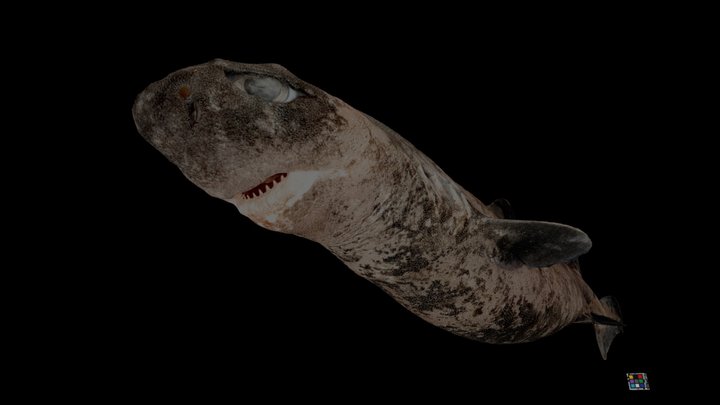
3D model
- Source
- Sketchfab
- Licence
- CC0 Public Domain
- Commercial use
- the licence allows it
Smithsonian Open Access and MorphoSource were not reached for this taxon, so this list is what the others held rather than everything there is.
The description on this site
- Licence
- CC BY-SA 4.0
This is what the site found, which is not the same as what exists.
Keep going
What may have been alongside itDalatias through timeFormations of the MioceneThe world it lived on
Occurrence data from the Paleobiology Database, CC BY 4.0. (Bonnaterre 1788)