Dactylioceras athleticum

via iDigBio · CC BY · via iDigBio. May be a photograph of a specimen, or an artist’s reconstruction — an interpretation of a skeleton, since colour and soft tissue are almost never preserved.
On record
Recorded, not inferred- Sits inside
- DactyliocerasPBDB
- Diet
- carnivorePBDB, for Ammonoidea
- Life habit
- nektonicPBDB, for Ammonoidea
- Motility
- fast-movingPBDB, for Ammonoidea
- Vision
- well-developedPBDB, for Cephalopoda
- Environment
- marinePBDB, for Cephalopoda
Time the record covers
At most 19 million years on record.
Every occurrence read is dated to somewhere between 192.9 Mya and 174.7 Mya, and nothing in the dating separates them, so that window is what the record shows rather than a span.
20 occurrences of Dactylioceras athleticum on record, most of them in the Early Jurassic. Bar height is expected occurrences, not a count: each fossil is spread across the span it is dated to, so a tall narrow bar means tight dating and a low wide one means loose.
When
20 occurrences- Early Jurassic100%
These are dates about fossils, not the animal: the record can only begin after it arose and end before it died out, so either end may reach further. Shares are expected occurrences: a fossil dated to a span is counted partly in each period it straddles. More on what this infers.
Found in
4 formations
- Alum Shale Formation6
- Spatsizi Formation · Hazelton Group2
- Posidonienschiefer Formation2
- Fernie Formation1
Loading coastlines…
The named rock units Dactylioceras athleticum has been recovered from, largest first. Drawn where the rock is now, not where it formed. 9 occurrences have no formation on record, which is common for older literature.
Dactylioceras athleticum and its relatives
Early JurassicWhere Dactylioceras athleticum and its relatives were recorded in the Early Jurassic.
Found in the same rock
41 taxa- Dactylioceras commune4 sites
- Dactylioceras praepositum4 sites
- Dactylioceras temperatum3 sites
- Harpoceras falciferum3 sites
- Hildoceras crassum3 sites
- Hildoceras sublevisoni3 sites
- Eleganticeras exaratum2 sites
- Frechiella subcarinata2 sites
- Harpoceras (Harpoceras)2 sites
- Hildaites murleyi2 sites
- Hildoceras lusitanicum2 sites
- Meleagrinella substriata2 sites
- Pseudolioceras lythense2 sites
- Acrocoelites ilminstrensis1 site
- Acrocoelites pyramidalis1 site
- Camptonectes subulatus1 site
- Dactylioceras consimile1 site
- Dactylioceras crassescens1 site
- Dactylioceras holandrei1 site
- Frechiella kammerkarensis1 site
- Frechiella venantii1 site
- Harpoceras (Harpoceras) lassum1 site
- Harpoceras eseri1 site
- Harpoceras subplanatum1 site
The Paleobiology Database records 17 sites for Dactylioceras athleticum, and this reads all of them. The number is how many of those sites it was catalogued from too. The 24 sharing the most are listed.
This is not a list of everything alive at the time. It is only what has come out of the same ground as this animal and been written down.
Entered from
9 references- The Jet Rock Series and the Alum Shale Series of the Yorkshire coast6
- High-resolution carbon isotope records of the Toarcian Oceanic Anoxic Event (Early Jurassic) from North America and implications for the global drivers of the Toarcian carbon cycle3
- Toarcian (Early Jurassic) ammonoids from western North America3
- Biostratigraphy and sequence stratigraphy of the Toarcian Ludwigskanal section (Franconian Alb, Southern Germany)2
- Les Harpoceratinae, Hildoceratinae et Parinoceratinae du Toarcien de la Vendée et des Deux-Sèvres (France)2
- Biostratigraphie, Fauna und Mikropaläontologie des Untertoarcium-Profiles von Unterstürmig (Oberfranken, Süddeutschland)1
- Évolution et systématique des Phymatoceratinae et des Grammoceratinae (Hildocerataceae Ammonitina) de la région de Thouars, stratotype du Toarcien1
- Stratigraphy and composition of the Mesozoic deposits in central Vestspitsbergen1
- Zur Kenntnis des Juras der Insel Timor: sowie des Aucellen-Horizontes von Seran und Buru1
Each of the 20 occurrences read was entered from one of these publications, ordered by how many each accounts for. This is not a search for papers mentioning the name. Entries link to doi.org where the Paleobiology Database holds an identifier, and to its own record where it does not. Relayed as the Paleobiology Database holds them, not checked against what they resolve to.
Media and terms
Media content2
Picture of Dactylioceras athleticum
- Source
- iDigBio
- Credit
- via iDigBio
- Licence
- CC BY
- Commercial use
- the licence allows it
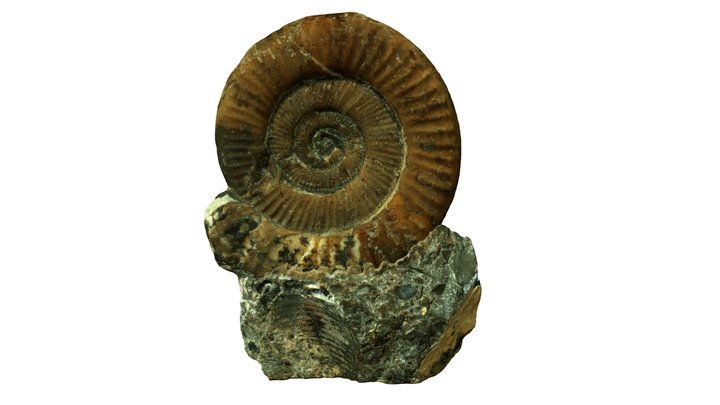
3D model
- Source
- Sketchfab
- Licence
- CC Attribution
- Commercial use
- cannot be read from the licence given — check the record
Smithsonian Open Access and MorphoSource were not reached for this taxon, so this list is what the others held rather than everything there is.
This is what the site found, which is not the same as what exists.
Keep going
What may have been alongside itDactylioceras through timeFormations of the Early JurassicThe world it lived on
Occurrence data from the Paleobiology Database, CC BY 4.0. (Simpson 1855)