Cushmanidea
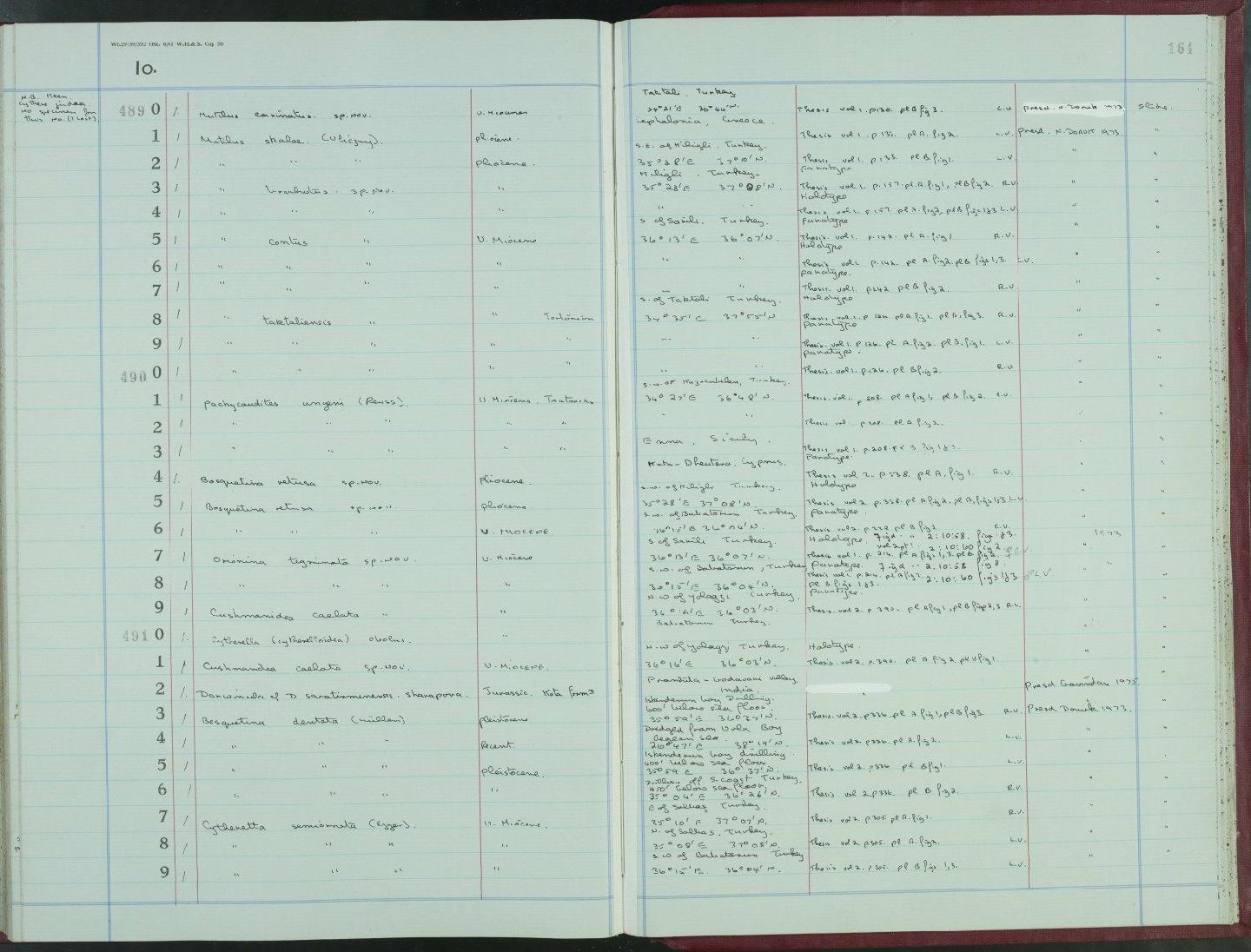
via iDigBio · CC BY · via iDigBio. May be a photograph of a specimen, or an artist’s reconstruction — an interpretation of a skeleton, since colour and soft tissue are almost never preserved.
On record
Recorded, not inferred- Sits inside
- NeocytherideidinaePBDB
- Diet
- detritivore, grazerPBDB, for Podocopida
- Life habit
- epifaunalPBDB, for Podocopida
- Motility
- actively mobilePBDB, for Ostracoda
- Vision
- limitedPBDB, for Ostracoda
- Environment
- marine,brackish,freshwaterPBDB, for Cytherideidae
Time the record covers
At least 84 million years on record.
The record covers at least 89.8 Mya to 5.333 Mya. No occurrence read is dated outside 93.9 Mya to 3.6 Mya.
42 occurrences of Cushmanidea on record, most of them in the Eocene. The Paleobiology Database records this as a living group, and the chart stops with its fossils rather than at the present. Bar height is expected occurrences, not a count: each fossil is spread across the span it is dated to, so a tall narrow bar means tight dating and a low wide one means loose.
When
42 occurrences- Late Cretaceous12%
- Eocene43%
- Oligocene14%
- Miocene29%
- Pliocene2%
These are dates about fossils, not the animal: the record can only begin after it arose and end before it died out, so either end may reach further. Shares are expected occurrences: a fossil dated to a span is counted partly in each period it straddles. More on what this infers.
Found in
14 formations
- Yazoo Formation14
- Yorktown Formation · Chesapeake Group6
- Lares Limestone Formation5
- Gosport Formation3
- Cibao Marl Formation3
- La Rosa Formation2
Loading coastlines…
The named rock units Cushmanidea has been recovered from, largest first. Drawn where the rock is now, not where it formed.
Cushmanidea and its relatives
EoceneWhere Cushmanidea and its relatives were recorded in the Eocene.
Found in the same rock
571 taxa- Loxoconcha13 sites
- Bairdia11 sites
- Hermanites10 sites
- Procythereis8 sites
- Actinocythereis7 sites
- Quadracythere7 sites
- Acuticythereis6 sites
- Aurila6 sites
- Clithrocytheridea6 sites
- Cytherella6 sites
- Cytherelloidea6 sites
- Cytheretta alexanderi6 sites
- Cytheridea garretti6 sites
- Cytheridea grigsbyi6 sites
- Cytheridea montgomeryensis6 sites
- Jugosocythereis6 sites
- Trachyleberis6 sites
- Triginglymus6 sites
- Archicythereis5 sites
- Brachycythere watervalleyensis5 sites
- Buntonia shubutaensis5 sites
- Cyamocytheridea5 sites
- Cythere ornatissima5 sites
- Cytherideis laevigata5 sites
The Paleobiology Database records 26 sites for Cushmanidea, and this reads all of them. The number is how many of those sites it was catalogued from too. The 24 sharing the most are listed.
This is not a list of everything alive at the time. It is only what has come out of the same ground as this animal and been written down.
Entered from
10 references- Jackson Eocene Ostracoda from the Cocoa Sand of Alabama14
- Middle Tertiary Ostracoda from northwestern Puerto Rico9
- Biostratigraphic study of Miocene Ostracoda of New Jersey, Maryland, and Virginia5
- Die Crustaceen der böhmischen Kreideformation5
- Gosport Eocene Ostracoda from Little Stave Creek, Alabama3
- Miocene Ostracoda from Venezuela2
- Ostracoda and Foraminifera assemblages of the Lower-Middle Miocene reefal carbonates within the Değirmençay Area, NW Mersin/S Turkey1
- A new decapod fauna from the Miocene Tuxpan Formation, eastern Mexico1
- Nautilus deluci d'Archiac from the Upper part of the Subathu Formation (Ilerdian-early Lutetian), Himachal Pradesh, India1
- Age and correlation of the Yorktown (Pliocene) and Croatan (Pliocene and Pleistocene) formations at the Lee Creek Mine1
Each of the 42 occurrences read was entered from one of these publications, ordered by how many each accounts for. This is not a search for papers mentioning the name. Entries link to doi.org where the Paleobiology Database holds an identifier, and to its own record where it does not. Relayed as the Paleobiology Database holds them, not checked against what they resolve to.
Media and terms
Media content1
Picture of Cushmanidea
- Source
- iDigBio
- Credit
- via iDigBio
- Licence
- CC BY
- Commercial use
- the licence allows it
No 3D scan of Cushmanidea was found in MorphoSource and Sketchfab.
Smithsonian Open Access was not reached for this taxon, so this list is what the others held rather than everything there is.
This is what the site found, which is not the same as what exists.
Keep going
What may have been alongside itNeocytherideidinae through timeFormations of the EoceneThe world it lived on
Occurrence data from the Paleobiology Database, CC BY 4.0.