Celestus
Celestus is a genus of diploglossid lizards mostly endemic to Jamaica and containing about 11 species, though three of these may be extinct. They are commonly known as galliwasps although the origin of this name is unclear. Formerly, this genus had more than 31 species, but a 2021 phylogenetic study found this classification to be paraphyletic and split those species into their own genera. A more recent study found that several ecomorphs exist on Jamaica including a swamp ecomorph, a tree ecomorph, and a ground ecomorph.

Simon J. Tonge · CC BY 3.0 · via Wikipedia/Commons. May be a photograph of a specimen, or an artist’s reconstruction — an interpretation of a skeleton, since colour and soft tissue are almost never preserved.
On record
Recorded, not inferred- Sits inside
- DiploglossinaePBDB
- Diet
- insectivore, carnivorePBDB, for Anguidae
- Motility
- actively mobilePBDB, for Osteichthyes
- Environment
- terrestrialPBDB, for Amniota
Time the record covers
At most 129 thousand years on record.
Every occurrence read is dated to somewhere between 129 ka and 0 Mya, and nothing in the dating separates them, so that window is what the record shows rather than a span.
8 occurrences of Celestus on record, most of them in the Pleistocene. The Paleobiology Database records this as a living group. Bar height is expected occurrences, not a count: each fossil is spread across the span it is dated to, so a tall narrow bar means tight dating and a low wide one means loose.
When
8 occurrences- Pleistocene58%
- Holocene42%
These are dates about fossils, not the animal: the record can only begin after it arose and end before it died out, so either end may reach further. Shares are expected occurrences: a fossil dated to a span is counted partly in each period it straddles. More on what this infers.
Celestus and its relatives
PleistoceneWhere Celestus and its relatives were recorded in the Pleistocene.
Found in the same rock
65 taxa- Anolis5 sites
- Nesophontes5 sites
- Chelonoidis marcanoi4 sites
- Leiocephalus4 sites
- Acratocnus3 sites
- Geocapromys3 sites
- Plagiodontia aedium3 sites
- Plagiodontia araeum3 sites
- Serpentes3 sites
- Anolis sagrei2 sites
- Aristelliger praesignis2 sites
- Athene cunicularia2 sites
- Brachyphylla nana2 sites
- Capromys2 sites
- Homo sapiens2 sites
- Isolobodon2 sites
- Isolobodon portoricensis2 sites
- Macrotus waterhousii2 sites
- Patagioenas inornata2 sites
- Puffinus lherminieri2 sites
- Ameiva dorsalis1 site
- Aristelliger1 site
- Arrhyton sp.1 site
- Charadrius vociferus1 site
The Paleobiology Database records 7 sites for Celestus, and this reads all of them. The number is how many of those sites it was catalogued from too. The 24 sharing the most are listed.
This is not a list of everything alive at the time. It is only what has come out of the same ground as this animal and been written down.
Entered from
3 references- A new species of extinct Late Quaternary giant tortoise from Hispaniola4
- Late Quaternary fossil vertebrates from the Cayman Islands2
- Living and late Holocene fossil vertebrates and the vegetation of the Cockpit Country, Jamaica2
Each of the 8 occurrences read was entered from one of these publications, ordered by how many each accounts for. This is not a search for papers mentioning the name. Each entry links to doi.org. Relayed as the Paleobiology Database holds them, not checked against what they resolve to.
Media and terms
Media content1
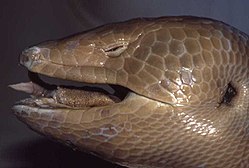
Picture of Celestus
- Source
- Wikipedia/Commons
- Credit
- Simon J. Tonge
- Licence
- CC BY 3.0
- Commercial use
- the licence allows it
No 3D scan of Celestus was found in Sketchfab.
Smithsonian Open Access and MorphoSource were not reached for this taxon, so this list is what the others held rather than everything there is.
The description on this site
- Source
- Wikipedia, “Celestus”
- Licence
- CC BY-SA 4.0
This is what the site found, which is not the same as what exists.
Keep going
What may have been alongside itDiploglossinae through timeFormations of the PleistoceneThe world it lived on
Occurrence data from the Paleobiology Database, CC BY 4.0. Gray 1838