Bryopsida
The Bryopsida constitute the largest class of mosses, containing 95% of all moss species. It consists of approximately 11,500 species, common throughout the whole world.

Kristian Peters -- Fabelfroh 09:51, 31 December 2006 (UTC) · CC BY-SA 3.0 · via Wikipedia/Commons. May be a photograph of a specimen, or an artist’s reconstruction — an interpretation of a skeleton, since colour and soft tissue are almost never preserved.
On record
Recorded, not inferred- Sits inside
- BryophytaPBDB
- Diet
- "photoautotroph"PBDB, for Streptophyta
Time the record covers
At least 249 million years on record.
The record covers at least 251.902 Mya to 2.58 Mya. No occurrence read is dated outside 254.14 Mya to 129 ka.
342 occurrences of Bryopsida on record, most of them in the Paleocene. The Paleobiology Database records this as a living group, and the chart stops with its fossils rather than at the present. Bar height is expected occurrences, not a count: each fossil is spread across the span it is dated to, so a tall narrow bar means tight dating and a low wide one means loose.
When
342 occurrences- Permianunder 1%
- Early Triassicunder 1%
- Middle Triassicunder 1%
- Late Triassic5%
- Middle Jurassicunder 1%
- Late Jurassicunder 1%
- Early Cretaceous12%
- Late Cretaceous28%
- Paleocene37%
- Eocene9%
- Oligoceneunder 1%
- Miocene3%
- Pleistoceneunder 1%
These are dates about fossils, not the animal: the record can only begin after it arose and end before it died out, so either end may reach further. Shares are expected occurrences: a fossil dated to a span is counted partly in each period it straddles. More on what this infers.
Found in
53 formations
- Fort Union Formation73
- Lefipán Formation21
- Bathurst Island Formation19
- Turtel Mountain Formation19
- Monte Chico Formation18
- Molteno Formation · Stormberg Group16
Loading coastlines…
The named rock units Bryopsida has been recovered from, largest first. Drawn where the rock is now, not where it formed. 29 further formations hold fewer occurrences each and are not listed. 57 occurrences have no formation on record, which is common for older literature.
Bryopsida and its relatives
PaleoceneWhere Bryopsida and its relatives were recorded in the Paleocene.
Found in the same rock
2,088 taxa- Stereisporites125 sites
- Laevigatosporites104 sites
- Triporopollenites104 sites
- Tricolpites86 sites
- Gleicheniidites78 sites
- Laevigatosporites ovatus67 sites
- Liliacidites66 sites
- Stereisporites antiquasporites63 sites
- Cyathidites minor61 sites
- <Bisaccate pollen>59 sites
- <Taxodiaceae/Cupressaceae>59 sites
- Alnipollenites verus59 sites
- Momipites wyomingensis59 sites
- Leiotriletes58 sites
- Tricolpites hians58 sites
- Ulmipollenites <krempii/tricostatus>56 sites
- Caryapollenites imparalis55 sites
- Caryapollenites veripites55 sites
- Albertipollenites anguloluminosus54 sites
- Cycadopites52 sites
- Nyssa ingentipollinia50 sites
- <Tricolpate fine reticulum>49 sites
- Phyllocladidites mawsonii49 sites
- Araucariacites australis47 sites
The Paleobiology Database records 230 sites for Bryopsida, and this reads all of them. Of that, one read hit the database's own return limit, so every count below is a floor rather than a total. The number is how many of those sites it was catalogued from too. The 24 sharing the most are listed.
This is not a list of everything alive at the time. It is only what has come out of the same ground as this animal and been written down.
Entered from
67 references- Palynological data from the Fort Union and Wasatch formations, Powder River basin, Wyoming and Montana59
- Biostratigraphy of selected K/T boundary sections in southwestern North Dakota, USA: toward a refinement of palynological identification criteria36
- Palinología del entorno cretácico/paleógeno del SO de la provincia de Santa Cruz: significado estratigráfico y paleoambiental22
- Cretaceous/Paleogene Floral Turnover in Patagonia: Drop in Diversity, Low Extinction, and a Classopollis Spike21
- Upper Mesozoic microfloras from South-Eastern20
- A reconstruction of the early Palaeocene palaeovegetation of Turtle Mountain, south-western Manitoba, Canada19
- Palynology of the Cenomanian of Bathurst Island, Northern Territory, Australia19
- Table 35 Molteno vegetative genera, phytosociological table17
- Cryptogam spores from the upper Campanian and Maastrichtian of Seymour Island, Antarctica15
- Persistent near-tropical warmth on the Antarctic continent during the early Eocene epoch10
- Cretaceous palynomorphs from the James Ross Island area, Antarctica - A pilot Study10
- Polar forests on the edge of extinction: what does the fossil spore and pollen evidence from East Antarctica say?.8
Each of the 342 occurrences read was entered from one of these publications, ordered by how many each accounts for. This is not a search for papers mentioning the name. 55 further references are not listed. Entries link to doi.org where the Paleobiology Database holds an identifier, and to its own record where it does not. Relayed as the Paleobiology Database holds them, not checked against what they resolve to.
Media and terms
Media content1
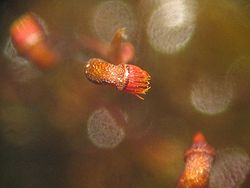
Picture of Bryopsida
- Source
- Wikipedia/Commons
- Credit
- Kristian Peters -- Fabelfroh 09:51, 31 December 2006 (UTC)
- Licence
- CC BY-SA 3.0
- Commercial use
- the licence allows it
No 3D scan of Bryopsida was found in Sketchfab.
Smithsonian Open Access and MorphoSource were not reached for this taxon, so this list is what the others held rather than everything there is.
The description on this site
- Source
- Wikipedia, “Bryopsida”
- Licence
- CC BY-SA 4.0
This is what the site found, which is not the same as what exists.
Keep going
What may have been alongside itBryophyta through timeFormations of the PaleoceneThe world it lived on
Occurrence data from the Paleobiology Database, CC BY 4.0.