Boiotremus
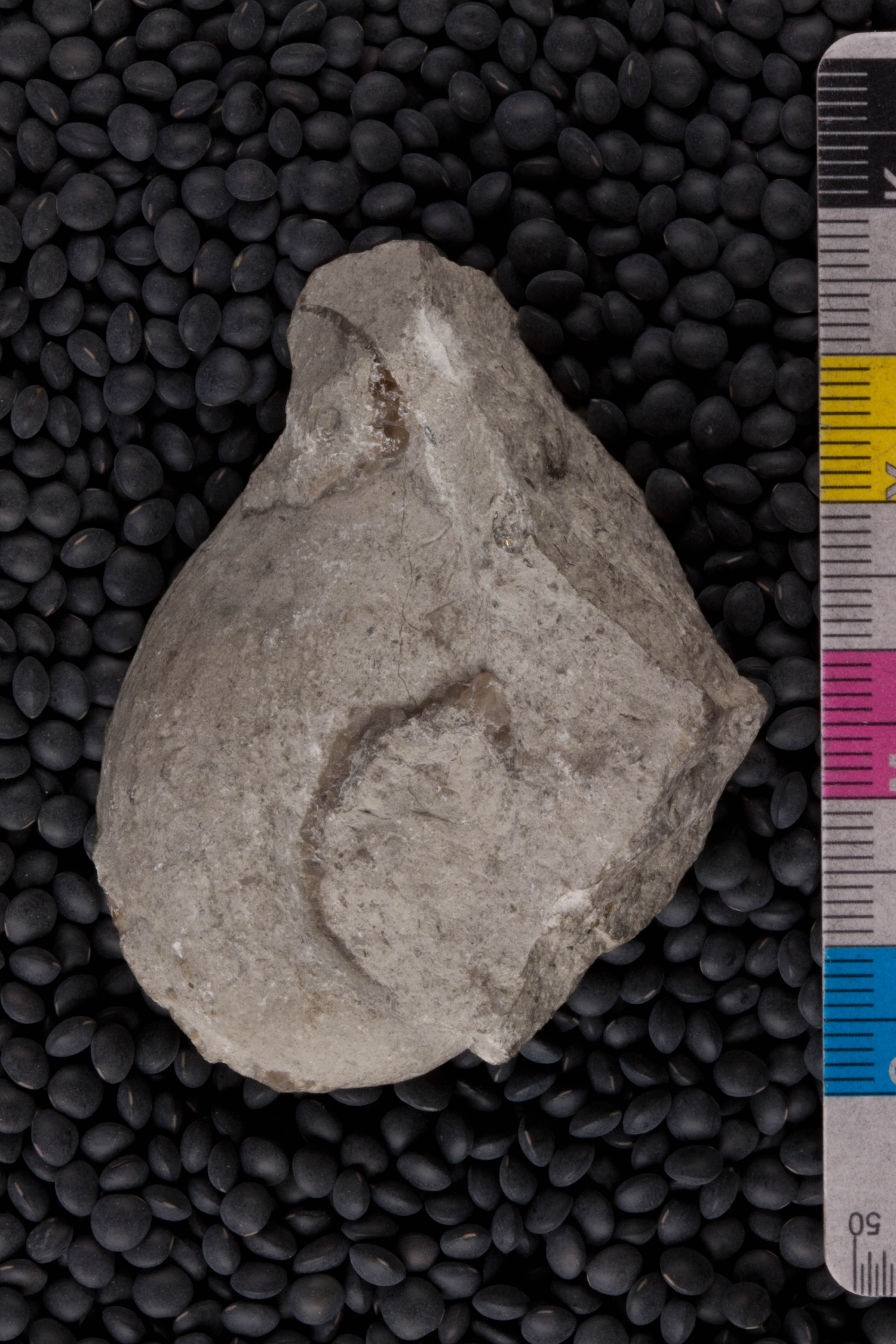
The Field Museum of Natural History · CC0 · via GBIF. May be a photograph of a specimen, or an artist’s reconstruction — an interpretation of a skeleton, since colour and soft tissue are almost never preserved.
On record
Recorded, not inferred- Sits inside
- TremanotinaePBDB
- Diet
- detritivorePBDB, for Bucaniidae
- Life habit
- epifaunalPBDB, for Bucaniidae
- Motility
- actively mobilePBDB, for Bucaniidae
- Vision
- limitedPBDB, for Gastropoda
- Environment
- marinePBDB, for Bellerophontida
Time the record covers
At least 20 million years on record.
The record covers at least 433.5 Mya to 413.02 Mya. No occurrence read is dated outside 438.8 Mya to 393.47 Mya.
31 occurrences of Boiotremus on record, most of them in the Silurian. Bar height is expected occurrences, not a count: each fossil is spread across the span it is dated to, so a tall narrow bar means tight dating and a low wide one means loose.
When
31 occurrencesThese are dates about fossils, not the animal: the record can only begin after it arose and end before it died out, so either end may reach further. Shares are expected occurrences: a fossil dated to a span is counted partly in each period it straddles. More on what this infers.
Found in
13 formations
- Kopanina Formation12
- Hogklint Formation3
- Lower Visby Formation2
- Upper Visby Formation2
- Praha Formation2
- Burgsvik Beds Formation2
Loading coastlines…
The named rock units Boiotremus has been recovered from, largest first. Drawn where the rock is now, not where it formed.
Boiotremus and its relatives
SilurianWhere Boiotremus and its relatives were recorded in the Silurian.
Found in the same rock
484 taxa- Poleumita discors6 sites
- Bucania squamosus4 sites
- Euomphalopterus alatus4 sites
- Gotlandiela contraria4 sites
- Loxonema4 sites
- Oriostoma globosum4 sites
- Prosolarium limata4 sites
- Prosoptychus sphaera4 sites
- Siluriphorus gotlandicus4 sites
- Spiroraphe aequilatera4 sites
- Euomphalopterus3 sites
- Favosites3 sites
- Heliolites3 sites
- Hormotoma3 sites
- Loxoplocus gothlandicus3 sites
- Morphotropis helicina3 sites
- Oriostoma angulatum3 sites
- Oriostoma roemeri3 sites
- Orthonychia3 sites
- Orthonychia enorme3 sites
- Pachystrophia gotlandicus3 sites
- Plectonotoides boucoti3 sites
- Prosolarium halei3 sites
- Pycnomphalus acutus3 sites
The Paleobiology Database records 25 sites for Boiotremus, and this reads all of them. The number is how many of those sites it was catalogued from too. The 24 sharing the most are listed.
This is not a list of everything alive at the time. It is only what has come out of the same ground as this animal and been written down.
Entered from
13 references- The Silurian Gastropoda and Pteropoda of Gotland10
- Perner, 19038
- Lower Paleozoic Bellerophontina (Gastropoda) of Bohemia3
- Silurian and Lochkovian communities in the Prague basin (Barrandian area, Czech Republic)1
- Homeomorphic gastropods from the Silurian of Norway, Estonia and Bohemia1
- Wenlockian to Emsian communities of the Carnic Alps (Austria and Italy)1
- A new Silurian gastropod from Bohemia with the operculum in situ1
- Locality 8:1 Päri Outcrop1
- Lower Wenlock faunal and floral dynamics - Vattenfallet section, Gotland1
- Two new gastropod genera from the Lower Silurian of the Oslo Region, Norway1
- Silurian Reefs of Gotland1
- Perner, 19071
Each of the 31 occurrences read was entered from one of these publications, ordered by how many each accounts for. This is not a search for papers mentioning the name. 1 further reference is not listed. Entries link to doi.org where the Paleobiology Database holds an identifier, and to its own record where it does not. Relayed as the Paleobiology Database holds them, not checked against what they resolve to.
Media and terms
Media content1
Picture of Boiotremus
- Source
- GBIF
- Credit
- The Field Museum of Natural History
- Licence
- CC0
- Commercial use
- the licence allows it
No 3D scan was found. Smithsonian Open Access, MorphoSource and Sketchfab were all searched.
This is what the site found, which is not the same as what exists.
Keep going
What may have been alongside itTremanotinae through timeFormations of the SilurianThe world it lived on
Occurrence data from the Paleobiology Database, CC BY 4.0. Horný 1962