Neophoca cinerea
Searched as Arctocephalus australis. The Paleobiology Database treats Neophoca cinerea as the accepted name.
The South American fur seal breeds on the coasts of Peru, Chile, the Falkland Islands, Argentina, Uruguay and Brazil. South American fur seals are of least concern on the IUCN Red List. The total population is around 300,000-450,000. Populations are affected by hunting and environmental stressors. Arctocephalus australis have a dark grey or brown fur coat and are sexually dimorphic. Males compete for territory and females to mate with, forming a dominance hierarchy. Breeding season is from October to December, whereas multiple pups are bred each season. South American fur seals are nocturnal, carnivorous hunters that primarily eat demersal and pelagic fish. They are social and often hunt in groups. Communication within the species occurs through a variety of vocalizations, such as guttural threats, barks, whimpers, or submissive calls from the males and growls or high-pitched wails to gather pups from females. Four subspecies may be recognized: A. a. australis, A. a. gracilis, A. a. forsteri, and an unnamed species.

4028mdk09 · CC BY-SA 3.0 · via Wikipedia/Commons. May be a photograph of a specimen, or an artist’s reconstruction — an interpretation of a skeleton, since colour and soft tissue are almost never preserved.
On record
Recorded, not inferred- Also called
- Australian sea lionPBDB
- Sits inside
- NeophocaPBDB
- Diet
- piscivorePBDB, for Otariidae
- Life habit
- amphibiousPBDB, for Pinnipedia
- Motility
- actively mobilePBDB, for Osteichthyes
- Environment
- marinePBDB, for Pinnipedia
Time the record covers
At most 129 thousand years on record.
Every occurrence read is dated to somewhere between 129 ka and 0 Mya, and nothing in the dating separates them, so that window is what the record shows rather than a span.
9 occurrences of Neophoca cinerea on record, most of them in the Holocene. The Paleobiology Database records this as a living group. Bar height is expected occurrences, not a count: each fossil is spread across the span it is dated to, so a tall narrow bar means tight dating and a low wide one means loose.
When
9 occurrences- Pleistocene11%
- Holocene89%
These are dates about fossils, not the animal: the record can only begin after it arose and end before it died out, so either end may reach further. Shares are expected occurrences: a fossil dated to a span is counted partly in each period it straddles. More on what this infers.
Found in
2 formations
- Dennington Aeolianite Formation1
- Miramar Formation · Punta San Andrés Group1
Loading coastlines…
The named rock units Neophoca cinerea has been recovered from, largest first. Drawn where the rock is now, not where it formed. 7 occurrences have no formation on record, which is common for older literature.
Neophoca cinerea and its relatives
HoloceneWhere Neophoca cinerea and its relatives were recorded in the Holocene.
Found in the same rock
1 taxonThe Paleobiology Database records 8 sites for Neophoca cinerea, and this reads all of them. The number is how many of those sites it was catalogued from too.
This is not a list of everything alive at the time. It is only what has come out of the same ground as this animal and been written down.
Entered from
4 references- Islands in the sea: extreme female natal site fidelity in the Australian sea lion, Neophoca cinerea5
- Energetics of a benthic diver: seasonal foraging ecology of the Australian sea lion, Neophoca cinerea2
- Taphonomy of a skeleton of Arctocephalus australis (Carnivora: Pinnipeda: Otariidae) from the Holocene of Miramar locality (southern Buenos Aires, Argentina)1
- Fossil sea lion from Queenscliff, Victoria1
Each of the 9 occurrences read was entered from one of these publications, ordered by how many each accounts for. This is not a search for papers mentioning the name. Entries link to doi.org where the Paleobiology Database holds an identifier, and to its own record where it does not. Relayed as the Paleobiology Database holds them, not checked against what they resolve to.
Media and terms
Media content3

Picture of Neophoca cinerea
- Source
- Wikipedia/Commons
- Credit
- 4028mdk09
- Licence
- CC BY-SA 3.0
- Commercial use
- the licence allows it
Laser scan
- Source
- MorphoSource
- Licence
- In Copyright
- Commercial use
- cannot be read from the licence given — check the record
- Specimen
- Arctocephalus australis · NHMUK:ZD:84.912
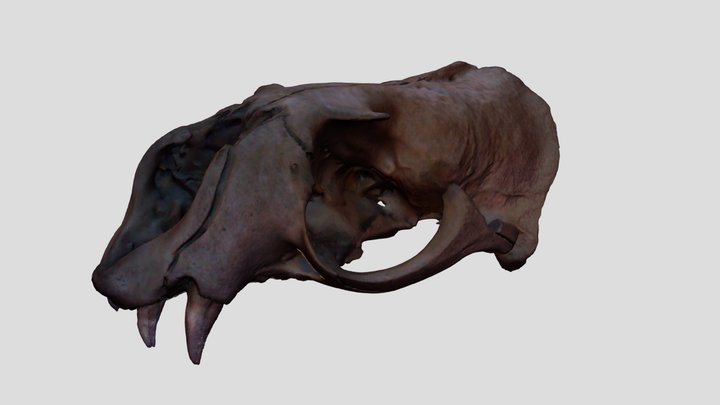
3D model
- Source
- Sketchfab
- Credit
- Repositorio CADIC
- Licence
- CC Attribution
- Commercial use
- cannot be read from the licence given — check the record
Smithsonian Open Access was not reached for this taxon, so this list is what the others held rather than everything there is.
The description on this site
- Licence
- CC BY-SA 4.0
This is what the site found, which is not the same as what exists.
Keep going
What may have been alongside itNeophoca through timeFormations of the HoloceneThe world it lived on
Occurrence data from the Paleobiology Database, CC BY 4.0. (Quoy and Gaimard 1830)