Archaeocyatha
Archaeocyatha is a taxon of extinct, sessile, reef-building marine sponges that lived in warm tropical and subtropical waters during the Cambrian Period. It is thought that the centre of the Archaeocyatha origin is now located in East Siberia, where they are first known from the beginning of the Tommotian Age of the Cambrian, 525 million years ago (mya). In other regions of the world, they appeared much later, during the Atdabanian, and quickly diversified into over a hundred families. They became the planet's first reef-building animals and are an index fossil for the Lower Cambrian worldwide.

Stanton F. Fink · CC BY 2.5 · via Wikipedia/Commons. May be a photograph of a specimen, or an artist’s reconstruction — an interpretation of a skeleton, since colour and soft tissue are almost never preserved.
On record
Recorded, not inferred- Also called
- archaeocyath spongePBDB
- Sits inside
- PoriferaPBDB
- Diet
- suspension feederPBDB
- Life habit
- intermediate-level epifaunalPBDB
- Motility
- stationary, attachedPBDB
- Vision
- blindPBDB, for Porifera
Time the record covers
At least 29 million years on record.
The record covers at least 538.8 Mya to 509.7 Mya. No occurrence read is dated outside 635 Mya to 497 Mya.
4,655 occurrences of Archaeocyatha on record, most of them in the Cambrian. Bar height is expected occurrences, not a count: each fossil is spread across the span it is dated to, so a tall narrow bar means tight dating and a low wide one means loose.
When
4,655 occurrences- Cambrian100%
These are dates about fossils, not the animal: the record can only begin after it arose and end before it died out, so either end may reach further. Shares are expected occurrences: a fossil dated to a span is counted partly in each period it straddles. More on what this infers.
Found in
107 formations
- Usa Formation1,274
- Pestrotsvet Formation724
- Upper Monok Formation226
- Amouslek Formation138
- Salaany Gol Formation118
- Upper Shangan Formation88
Loading coastlines…
The named rock units Archaeocyatha has been recovered from, largest first. Drawn where the rock is now, not where it formed. 83 further formations hold fewer occurrences each and are not listed. 225 occurrences have no formation on record, which is common for older literature.
Archaeocyatha and its relatives
CambrianWhere Archaeocyatha and its relatives were recorded in the Cambrian.
Found in the same rock
745 taxa- Nochoroicyathus65 sites
- Archaeolynthus62 sites
- Dictyocyathus59 sites
- Cambrocyathellus45 sites
- Dokidocyathus41 sites
- Renalcis38 sites
- Tumuliolynthus37 sites
- Erismacoscinus35 sites
- Coscinocyathus30 sites
- Rotundocyathus30 sites
- Tumulocyathus29 sites
- Protopharetra27 sites
- Capsulocyathus26 sites
- Epiphyton25 sites
- Paranacyathus25 sites
- Ajacicyathus24 sites
- Okulitchicyathus24 sites
- Archaeocyathus23 sites
- Irinaecyathus23 sites
- Sibirecyathus23 sites
- Girvanella19 sites
- Szecyathus18 sites
- Leptosocyathus17 sites
- Loculicyathus17 sites
The Paleobiology Database records at least 174 sites for Archaeocyatha, and this reads 174 of them. The number is how many of those sites it was catalogued from too. The 24 sharing the most are listed.
This is not a list of everything alive at the time. It is only what has come out of the same ground as this animal and been written down.
Entered from
115 references- Stratigrafiya i arkheotsiaty nizhnego kembriya Altaye-Sayanskoy skladchatoy oblasti [Lower Cambrian stratigraphy and archaeocyatha of the Altay-Sayan fold belt]1,110
- Biostratigraphy of the Kiya River section. - Early Cambrian Archaeocyaths and spicular sponges from the Kiya River section (Kuznetsk Alatau)913
- Rannekembriyskiye fatsialnyye kompleksy arkheotsiat (r. Lena, sredneye techeniye) [Lower Cambrian archaeocyath complexes (middle Lena River)]449
- Archaeocyaths of the Lower Cambrian of Morocco131
- Tommotskiu jarus i problema nizhney granisty kembriya [The Tommotian Stage and the Cambrian lower Boundary problem]125
- Primordial metazoan-calcimicrobial reefs: Tommotian (Early Cambrian) of the Siberian Platform122
- Varlamov et al., 2008116
- Archaeocyatha from lower parts of the Lower Cambrian carbonate sequence in South Australia115
- Archaeocyathids from the Atdabanian (Lower Cambrian) of the Altay-Sayan Foldbelt, Russia94
- Arkheotsiaty i biostratigrafiya kotuyskogo gorizonta nizhnego kembriya Prianabarya [Archaeocyatha and biostratigraphy of the Lower Cambrian Kotuy Horizon of the Anabar region]66
- Monticulos de arqueociatos y calcimicrobios del Cambrico inferior de Terrades, Gerona (Pirineo oriental, Espana) [Lower Cambrian archaeocyatha and calcimicrobe mounds in Terrades, Gerona (Eastern Pyrenees, Spain)]61
- Archaeocyatha from the MacKenzie and Cassiar Mountains, Northwest Territories, Yukon Territory and British Columbia59
Each of the 4,655 occurrences read was entered from one of these publications, ordered by how many each accounts for. This is not a search for papers mentioning the name. 103 further references are not listed. Entries link to doi.org where the Paleobiology Database holds an identifier, and to its own record where it does not. Relayed as the Paleobiology Database holds them, not checked against what they resolve to.
Media and terms
Media content2

Picture of Archaeocyatha
- Source
- Wikipedia/Commons
- Credit
- Stanton F. Fink
- Licence
- CC BY 2.5
- Commercial use
- the licence allows it
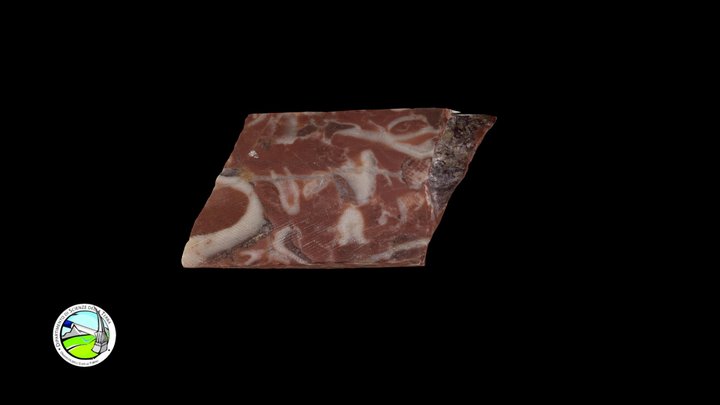
3D model
- Source
- Sketchfab
- Licence
- CC Attribution
- Commercial use
- cannot be read from the licence given — check the record
The description on this site
- Licence
- CC BY-SA 4.0
This is what the site found, which is not the same as what exists.
Keep going
What may have been alongside itPorifera through timeFormations of the CambrianThe world it lived on
Occurrence data from the Paleobiology Database, CC BY 4.0. (Vologdin 1937)