Anomoepus
Anomoepus is the name assigned to several fossil footprints first reported from Early Jurassic beds of the Connecticut River Valley, Massachusetts, US in 1802.

Jeffrey A. Wilson1*, Claudia A. Marsicano2, Roger M. H. Smith3 · CC BY 2.5 · via Wikipedia/Commons. May be a photograph of a specimen, or an artist’s reconstruction — an interpretation of a skeleton, since colour and soft tissue are almost never preserved.
Time the record covers
At least 121 million years on record.
The record covers at least 227.3 Mya to 106.3 Mya. No occurrence read is dated outside 237 Mya to 93.9 Mya.
159 occurrences of Anomoepus on record, most of them in the Early Jurassic. Bar height is expected occurrences, not a count: each fossil is spread across the span it is dated to, so a tall narrow bar means tight dating and a low wide one means loose.
When
159 occurrences- Late Triassic6%
- Early Jurassic81%
- Middle Jurassic5%
- Late Jurassic6%
- Early Cretaceous1%
- Late Cretaceousunder 1%
These are dates about fossils, not the animal: the record can only begin after it arose and end before it died out, so either end may reach further. Shares are expected occurrences: a fossil dated to a span is counted partly in each period it straddles. More on what this infers.
Found in
42 formations
- Portland Formation · Agawam Group51
- Elliot Formation · Stormberg Group18
- Turners Falls Formation · Meriden Group10
- Kayenta/Navajo Sandstone Formation · Glen Canyon Group8
- Navajo Sandstone Formation · Glen Canyon Group7
- Przysucha Formation5
Loading coastlines…
The named rock units Anomoepus has been recovered from, largest first. Drawn where the rock is now, not where it formed. 18 further formations hold fewer occurrences each and are not listed. 3 occurrences have no formation on record, which is common for older literature.
Anomoepus and its relatives
Early JurassicWhere Anomoepus and its relatives were recorded in the Early Jurassic.
Found in the same rock
222 taxa- Eubrontes sillimani21 sites
- Eubrontes20 sites
- Grallator20 sites
- Grallator tenuis20 sites
- Grallator tuberosus18 sites
- Eubrontes giganteus15 sites
- Grallator cursorius13 sites
- Batrachopus12 sites
- Eubrontes minusculus11 sites
- Batrachopus deweyi9 sites
- Theropoda9 sites
- Anchisauripus7 sites
- Argoides minimus7 sites
- Batrachopus gracilis7 sites
- Sauropus barrattii7 sites
- Steropoides diversus7 sites
- Kayentapus6 sites
- Otozoum moodii6 sites
- Plectropterna gracilis6 sites
- Plectropterna minitans6 sites
- Herpystezoum5 sites
- Platypterna concamerata5 sites
- Sillimanius tetradactylus5 sites
- Steropoides infelix5 sites
The Paleobiology Database records 97 sites for Anomoepus, and this reads all of them. The number is how many of those sites it was catalogued from too. The 24 sharing the most are listed.
This is not a list of everything alive at the time. It is only what has come out of the same ground as this animal and been written down.
Entered from
63 references- Appendix [B]. Descriptive catalogue of the specimens in the Hitchcock Ichnological Cabinet of Amherst College23
- Contribution à la classification des pistes de Vertébrés du Trias: les types du Stormberg d'Afrique du Sud (IIème partie: Le Stormberg superieur - I. Le biome de la zone B/1 ou niveau de Moyeni: ses biocénoses) [Contribution to the classification of the vertebrate tracks of the Triassic: the types from the Stormberg of South Africa (2nd part: The upper Stormberg - I. The biome of zone B/1 or Moyeni level: its biocoenoses]13
- Observations on the ichnogenus Gwyneddichium and Gwyneddichium-like footprints and trackways from the Upper Triassic of the western United States11
- Recent progress in ichnology10
- Triassic life of the Connecticut Valley9
- Hitchcock, 18589
- Tracking Late Jurassic ornithopods in the Lusitanian Basin (Portugal): ichnotaxonomic implications5
- Les niveaux paléontologiques de première apparition des mammifères primoridaux en Afrique du Sud et leur ichnologie. Establissement de zones stratigraphiques detaillees dans le Stormberg du Lesotho (Afrique du Sud) (Trias Supérieur à Jurassique) [The paleontological levels of the first appearance of primordial mammals in southern Africa and their ichnology. Establishment of detailed stratigraphic zones in the Stormberg of Lesotho (southern Africa) (Upper Triassic to Jurassic).5
- Tracking Early Jurassic dinosaurs across southwestern Utah and the Triassic-Jurassic transition3
- The Early Jurassic ornithischian dinosaurian ichnogenus Anomoepus3
- New dinosaur ichnotaxa from the Early Jurassic of the Holy Cross Mountains, Poland3
- Supplement to the ichnology of New England3
Each of the 159 occurrences read was entered from one of these publications, ordered by how many each accounts for. This is not a search for papers mentioning the name. 51 further references are not listed. Entries link to doi.org where the Paleobiology Database holds an identifier, and to its own record where it does not. Relayed as the Paleobiology Database holds them, not checked against what they resolve to.
Media and terms
Media content2

Picture of Anomoepus
- Source
- Wikipedia/Commons
- Credit
- Jeffrey A. Wilson1*, Claudia A. Marsicano2, Roger M. H. Smith3
- Licence
- CC BY 2.5
- Commercial use
- the licence allows it
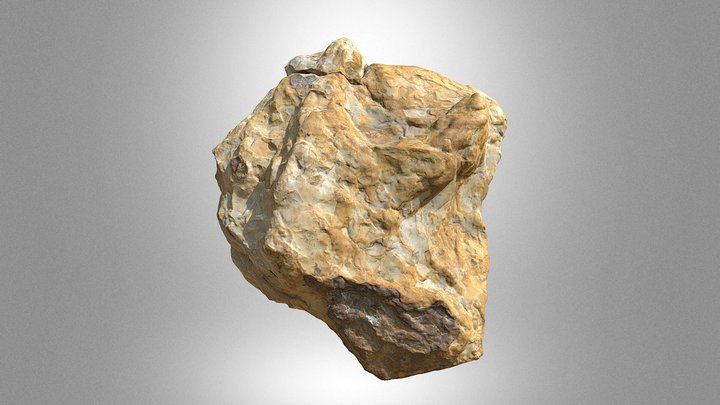
3D model
- Source
- Sketchfab
- Licence
- CC0 Public Domain
- Commercial use
- the licence allows it
The description on this site
- Source
- Wikipedia, “Anomoepus”
- Licence
- CC BY-SA 4.0
This is what the site found, which is not the same as what exists.
Keep going
What may have been alongside itFormations of the Early JurassicThe world it lived on
Occurrence data from the Paleobiology Database, CC BY 4.0.