Angiosperm indet.
No picture of Angiosperm indet. was found. Wikidata was searched and had none. Wikipedia has a picture filed under this name, but nothing tied it to Angiosperm indet. itself, so it was not used. iDigBio and GBIF were not searched: the Paleobiology Database does not place Angiosperm indet. firmly enough to tell it from something else bearing the same name, and a search on the name alone returns whichever of them was photographed. Smithsonian Open Access did not answer, so this is what the others held rather than everything there is.
Time the record covers
At least 105 million years on record.
The record covers at least 121.4 Mya to 15.98 Mya. No occurrence read is dated outside 143.1 Mya to 11.63 Mya.
86 occurrences of Angiosperm indet. on record, most of them in the Eocene. Bar height is expected occurrences, not a count: each fossil is spread across the span it is dated to, so a tall narrow bar means tight dating and a low wide one means loose.
When
86 occurrencesThese are dates about fossils, not the animal: the record can only begin after it arose and end before it died out, so either end may reach further. Shares are expected occurrences: a fossil dated to a span is counted partly in each period it straddles. More on what this infers.
Found in
10 formations
- Pidinga Formation8
- Taratu Formation · Onekakara Group7
- Caballos Formation5
- Iguincha Formation · Nabon Group3
- Latrero Formation · Nabon Group3
- Ocal Formation3
Loading coastlines…
The named rock units Angiosperm indet. has been recovered from, largest first. Drawn where the rock is now, not where it formed. 51 occurrences have no formation on record, which is common for older literature.
Angiosperm indet. and its relatives
EoceneWhere Angiosperm indet. and its relatives were recorded in the Eocene.
Found in the same rock
241 taxa- Proteaceae13 sites
- Lauraceae11 sites
- Angiosperm sp.10 sites
- Psilatriletes10 sites
- Echitriletes9 sites
- Inaperturapollenites (<scabratus>)9 sites
- Podocarpaceae9 sites
- Acmopyle glabra8 sites
- Afropollis jardinus8 sites
- Bowenia eocenica8 sites
- Brenneripollis8 sites
- Concavissimisporites8 sites
- Equisetosporites8 sites
- Retimonocolpites8 sites
- Agathis7 sites
- Callialasporites dampieri7 sites
- Cicatricosisporites hallei7 sites
- Classopollis intrareticulatus7 sites
- Echimonoletes7 sites
- Prumnopitys7 sites
- Verrucosisporites rotundus7 sites
- Araucarioides6 sites
- Gnetaceae6 sites
- Leptolepidites6 sites
The Paleobiology Database records 31 sites for Angiosperm indet., and this reads all of them. The number is how many of those sites it was catalogued from too. The 24 sharing the most are listed.
This is not a list of everything alive at the time. It is only what has come out of the same ground as this animal and been written down.
Entered from
12 references- Early Eocene Dispersed Cuticles and Mangrove to Rainforest vegetation at Strahan-Regatta Point, Tasmania39
- Palynological composition of a Lower Cretaceous South American tropical sequence: Climatic implications and diversity comparisons with other latitudes10
- Eocene Plant Fossils from the Lefroy and Cowan Paleodrainages, Western Australia8
- An Early Tertiary macroflora from West Dale, southwestern Australia7
- A new terrestrial Cretaceous-Paleogene site in New Zealand turnover in macroflora confirmed by palynology6
- Middle to late Miocene environments of southern Ecuador: temperature, elevation and fossil plants of the Nabon Basin.6
- Early Cretaceous palynostratigraphy, palynofacies and palaeoenvironments of well sections in northeastern Tierra del Fuego, Argentina3
- Paleocene plant macrofossils from Kakahu, south Canterbury, New Zealand2
- Beitrage zur Kenntnis der Tertiarflora von Seifhennersdorf (Sachsen)2
- Palynostratigraphic study of the Early Cretaceous Río Mayer and Kachaike formations at the Quebrada El Moro Section, Austral Basin, southwestern Argentina1
- The Lower Miocene Fauna of Al-Sarrar (Eastern Province, Saudi Arabia)1
- A review of the fossil flora of the West Indies, with descriptions of new species1
Each of the 86 occurrences read was entered from one of these publications, ordered by how many each accounts for. This is not a search for papers mentioning the name. Entries link to doi.org where the Paleobiology Database holds an identifier, and to its own record where it does not. Relayed as the Paleobiology Database holds them, not checked against what they resolve to.
Media and terms
Media content1
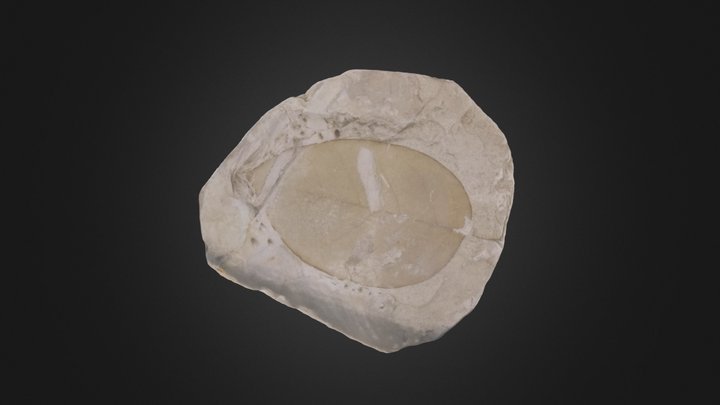
3D model
- Source
- Sketchfab
- Licence
- CC0 Public Domain
- Commercial use
- the licence allows it
No picture of Angiosperm indet. was found. Wikidata was searched and had none.
Wikipedia has a picture filed under this name, but nothing tied it to Angiosperm indet. itself, so it was not used.
iDigBio and GBIF were not searched: the Paleobiology Database does not place Angiosperm indet. firmly enough to tell it from something else bearing the same name, and a search on the name alone returns whichever of them was photographed.
Smithsonian Open Access did not answer, so this is what the others held rather than everything there is.
Smithsonian Open Access and MorphoSource were not reached for this taxon, so this list is what the others held rather than everything there is.
This is what the site found, which is not the same as what exists.
Keep going
What may have been alongside itFormations of the EoceneThe world it lived on
Occurrence data from the Paleobiology Database, CC BY 4.0.