Algae
Searched as Algae indet.. The Paleobiology Database treats Algae as the accepted name.
Algae are any of a large and diverse group of photosynthetic organisms. It excludes the land plants (embryophytes). Such organisms range from microscopic unicellular microalgae to seaweeds, multicellular macroalgae which may grow up to 50 metres (160 ft) in length. Most algae are aquatic, and some form cohesive colonies. Freshwater algae include Charophyta such as the filamentous Spirogyra and the grasslike stoneworts. Most algae are plankton carried passively by water, although some macroalgae have holdfasts for anchorage.

Toby Hudson · CC BY-SA 3.0 · via Wikipedia/Commons. May be a photograph of a specimen, or an artist’s reconstruction — an interpretation of a skeleton, since colour and soft tissue are almost never preserved.
On record
Recorded, not inferred- Sits inside
- PlantaePBDB
- Diet
- "photoautotroph"PBDB
Time the record covers
At least 515 million years on record.
The record covers at least 515.3 Mya to 129 ka. No occurrence read is dated outside 520 Mya to 11.7 ka.
256 occurrences of Algae on record, most of them in the Carboniferous. The Paleobiology Database records this as a living group. Bar height is expected occurrences, not a count: each fossil is spread across the span it is dated to, so a tall narrow bar means tight dating and a low wide one means loose.
When
256 occurrences- Cambrian10%
- Ordovician2%
- Silurian13%
- Devonian8%
- Carboniferous31%
- Permian3%
- Early Triassic1%
- Late Triassic2%
- Late Jurassicunder 1%
- Early Cretaceous7%
- Late Cretaceous9%
- Paleocene9%
- Eoceneunder 1%
- Oligoceneunder 1%
- Mioceneunder 1%
- Pleistoceneunder 1%
These are dates about fossils, not the animal: the record can only begin after it arose and end before it died out, so either end may reach further. Shares are expected occurrences: a fossil dated to a span is counted partly in each period it straddles. More on what this infers.
Found in
73 formations
- Graham Formation · Cisco Group48
- Burgess Shale Formation · Chancellor Group24
- Fort Union Formation24
- Caddo Creek Formation · Canyon Group15
- Bentiu Formation12
- Hell Creek Formation11
Loading coastlines…
The named rock units Algae has been recovered from, largest first. Drawn where the rock is now, not where it formed. 49 further formations hold fewer occurrences each and are not listed. 22 occurrences have no formation on record, which is common for older literature.
Algae and its relatives
CarboniferousWhere Algae and its relatives were recorded in the Carboniferous.
Found in the same rock
2,044 taxa- Laevigatosporites49 sites
- Botryococcus48 sites
- Microreticulatisporites44 sites
- Ovoidites44 sites
- Tricolpites44 sites
- Tricolporopollenites44 sites
- Deltoidospora43 sites
- Cicatricosisporites dorogensis42 sites
- Converrucosisporites42 sites
- Pediastrum42 sites
- Caryapollenites41 sites
- Coniferales41 sites
- Taxodium41 sites
- Triporopollenites41 sites
- Thompsonipollis magnificus40 sites
- Casurinidites pulcher39 sites
- Liliacidites39 sites
- Pinuspollenites38 sites
- Gleicheniidites36 sites
- Tricolpopollenites36 sites
- Leiotriletes35 sites
- Momipites35 sites
- Margocolporites34 sites
- Inapertisporites33 sites
The Paleobiology Database records 659 sites for Algae, and this reads 240 of them. The number is how many of those sites it was catalogued from too. The 24 sharing the most are listed.
This is not a list of everything alive at the time. It is only what has come out of the same ground as this animal and been written down.
Entered from
73 references- The surficial geology, paleontology, and paleoecology of the Finis Shale (Pennsylvanian, Lower Virgilian) in Jack County, Texas65
- Biostratigraphy of selected K/T boundary sections in southwestern North Dakota, USA: toward a refinement of palynological identification criteria35
- Paleoecology of the Greater Phyllopod Bed community, Burgess Shale24
- Palynozonation of the Cretaceous to Lower Paleogene Strata of the Muglad Basin, Sudan17
- Silurian Reefs of Gotland14
- Maastrichtian palynological assemblages from the Chorrillo Formation, Patagonia, Argentina4
- Brackish to freshwater dinoflagellate cyst assemblages from the La Colonia Formation (Paleocene?), northeastern Patagonia, Argentina4
- Paleoecology and paleoenvironment of the upper Honaker Trail Formation near Moab, Utah4
- Palaeoecology of calcified microfossils from the Lower Devonian (Pragian-Emsian) of Sierra Morena (SW Spain)3
- Stenolaemate bryozoan fauna from the Mississippian of Guadiato Area, southwestern Spain3
- Primary collection data of Cassian Formation used for publication of Fürsich and Wendt (1977) (ref. 9188)3
- SUNY-Binghamton Paleobiology Collection3
Each of the 256 occurrences read was entered from one of these publications, ordered by how many each accounts for. This is not a search for papers mentioning the name. 61 further references are not listed. Entries link to doi.org where the Paleobiology Database holds an identifier, and to its own record where it does not. Relayed as the Paleobiology Database holds them, not checked against what they resolve to.
Media and terms
Media content2
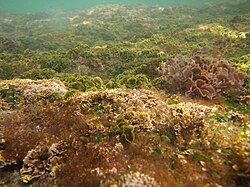
Picture of Algae
- Source
- Wikipedia/Commons
- Credit
- Toby Hudson
- Licence
- CC BY-SA 3.0
- Commercial use
- the licence allows it
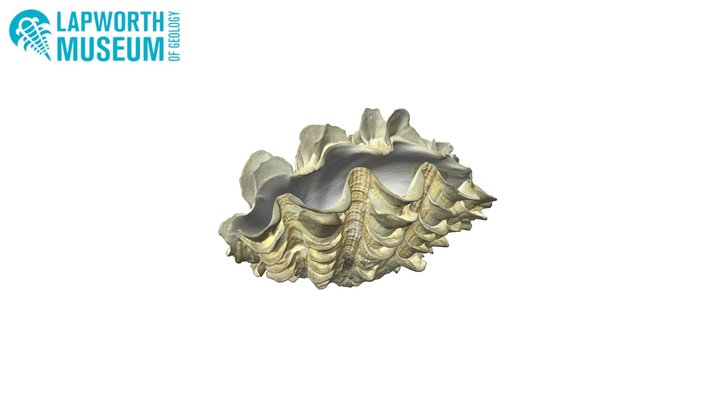
3D model
- Source
- Sketchfab
- Licence
- CC Attribution-NonCommercial
- Commercial use
- the licence does not allow it
Smithsonian Open Access was not reached for this taxon, so this list is what the others held rather than everything there is.
The description on this site
- Source
- Wikipedia, “Algae”
- Licence
- CC BY-SA 4.0
This is what the site found, which is not the same as what exists.
Keep going
What may have been alongside itPlantae through timeFormations of the CarboniferousThe world it lived on
Occurrence data from the Paleobiology Database, CC BY 4.0.