Acanthoceras amphibolum
No picture of Acanthoceras amphibolum was found. Wikidata, iDigBio and Smithsonian Open Access were searched and had none. Wikipedia did not answer, so this is what the others held rather than everything there is. GBIF was asked, and what came back is not recorded: nothing, or a picture this site could not tie to Acanthoceras amphibolum, or no answer at all. This entry cannot say which.
On record
Recorded, not inferred- Sits inside
- AcanthocerasPBDB
- Diet
- carnivorePBDB, for Ammonoidea
- Life habit
- nektonicPBDB, for Ammonoidea
- Motility
- fast-movingPBDB, for Ammonoidea
- Vision
- well-developedPBDB, for Cephalopoda
- Environment
- marinePBDB, for Cephalopoda
Time the record covers
At most 6.6 million years on record.
Every occurrence read is dated to somewhere between 100.5 Mya and 93.9 Mya, and nothing in the dating separates them, so that window is what the record shows rather than a span.
29 occurrences of Acanthoceras amphibolum on record, most of them in the Late Cretaceous. Bar height is expected occurrences, not a count: each fossil is spread across the span it is dated to, so a tall narrow bar means tight dating and a low wide one means loose.
When
29 occurrences- Late Cretaceous100%
These are dates about fossils, not the animal: the record can only begin after it arose and end before it died out, so either end may reach further. Shares are expected occurrences: a fossil dated to a span is counted partly in each period it straddles. More on what this infers.
Found in
9 formations
- Frontier Formation · Colorado Group8
- Eagle Ford Formation5
- Woodbine Formation4
- Dakota Sandstone Formation3
- Mancos Shale Formation3
- Odukpani Formation1
Loading coastlines…
The named rock units Acanthoceras amphibolum has been recovered from, largest first. Drawn where the rock is now, not where it formed. 2 occurrences have no formation on record, which is common for older literature.
Acanthoceras amphibolum and its relatives
Late CretaceousWhere Acanthoceras amphibolum and its relatives were recorded in the Late Cretaceous.
Found in the same rock
71 taxa- Inoceramus arvanus8 sites
- Tarrantoceras sellardsi7 sites
- Ostrea beloiti6 sites
- Cunningtoniceras amphibolum fallense4 sites
- Borissiakoceras orbiculatum2 sites
- Borissjakoceras2 sites
- Caestocorbula2 sites
- Caryocorbula2 sites
- Cobbanicaprina bighornensis2 sites
- Cunningtoniceras lonsdalei2 sites
- Desmoceras (Pseudouhligella)2 sites
- Inoceramus rutherfordi2 sites
- Lispodesthes2 sites
- Ostrea2 sites
- Paracompsoceras landisi2 sites
- Protacanthoceras hosei2 sites
- Sanoarca grandis2 sites
- Turrilites acutus2 sites
- ? Levicerithium altum1 site
- Acanthoceras johnsonianum1 site
- Anatimya1 site
- Anisoceras plicatilis1 site
- Anomia1 site
- Borissjakoceras reesidei1 site
The Paleobiology Database records 24 sites for Acanthoceras amphibolum, and this reads all of them. The number is how many of those sites it was catalogued from too. The 24 sharing the most are listed.
This is not a list of everything alive at the time. It is only what has come out of the same ground as this animal and been written down.
Entered from
13 references- Middle Cenomanian (Late Cretaceous) molluscan fauna from the base of the Boquillas Formation, Cerro de Muleros, Dona Ana County, New Mexico5
- Some Middle Cenomanian (Upper Cretaceous) acanthoceratid ammonites from the Western Interior of the United States5
- Larger invertebrate fossils of the Woodbine formation (Cenomanian) of Texas4
- Subspecies kluges: a pointless taxonomic database to create species opinions for subspecies that then will be over-ruled and allow subspecies occurrences to be recognized as the subspecies rather than the parent species2
- First record of a middle Cenomanian caprinuloideid rudist (Hippuritida, Bivalvia) from Montana, USA, and its geographical and stratigraphical significance2
- Carbon and oxygen stable isotopes of selected Cenomanian and Turonian rudists from Egypt and Czech Republic, and a note on changes in rudist diversity2
- A selachian-dominated assemblage from the Upper Cretaceous (Cenomanian) Clay Mesa Member, Mancos Formation, Santa Fe County, NM2
- A condensed middle Cenomanian succession in the Dakota Sandstone (Upper Cretaceous), Sevilleta National Wildlife Refuge, Socorro County, New Mexico2
- Exceptionally preserved invertebrate fauna from the Upper Cretaceous Paguate Member of the Dakota Formation, Rio Puerco Valley, Sandoval county, New Mexico1
- Upper Cretaceous ammonites from the Calabar region, south-east Nigeria1
- New and little-known ammonites from the Upper Cretaceous (Cenomanian and Turonian) of the western interior of the United States1
- Basal Eagle Ford fauna (Cenomanian) in Johnson and Tarrant Counties, Texas1
Each of the 29 occurrences read was entered from one of these publications, ordered by how many each accounts for. This is not a search for papers mentioning the name. 1 further reference is not listed. Entries link to doi.org where the Paleobiology Database holds an identifier, and to its own record where it does not. Relayed as the Paleobiology Database holds them, not checked against what they resolve to.
Media and terms
Media content1
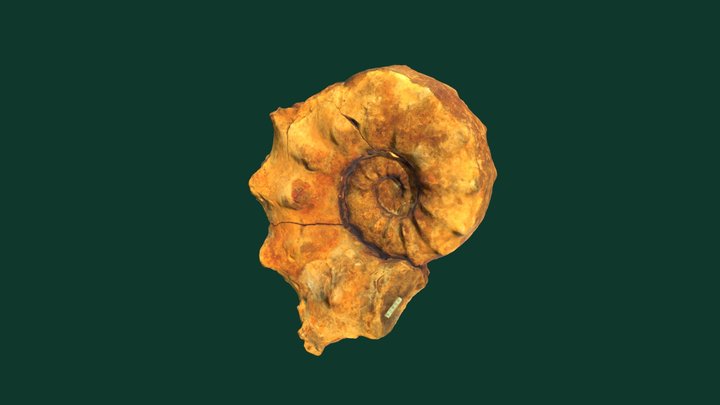
3D model
- Source
- Sketchfab
- Credit
- Shellie Luallin
- Licence
- CC Attribution
- Commercial use
- cannot be read from the licence given — check the record
No picture of Acanthoceras amphibolum was found. Wikidata, iDigBio and Smithsonian Open Access were searched and had none.
Wikipedia did not answer, so this is what the others held rather than everything there is.
GBIF was asked, and what came back is not recorded: nothing, or a picture this site could not tie to Acanthoceras amphibolum, or no answer at all. This entry cannot say which.
This is what the site found, which is not the same as what exists.
Keep going
What may have been alongside itAcanthoceras through timeFormations of the Late CretaceousThe world it lived on
Occurrence data from the Paleobiology Database, CC BY 4.0. (Morrow 1935)